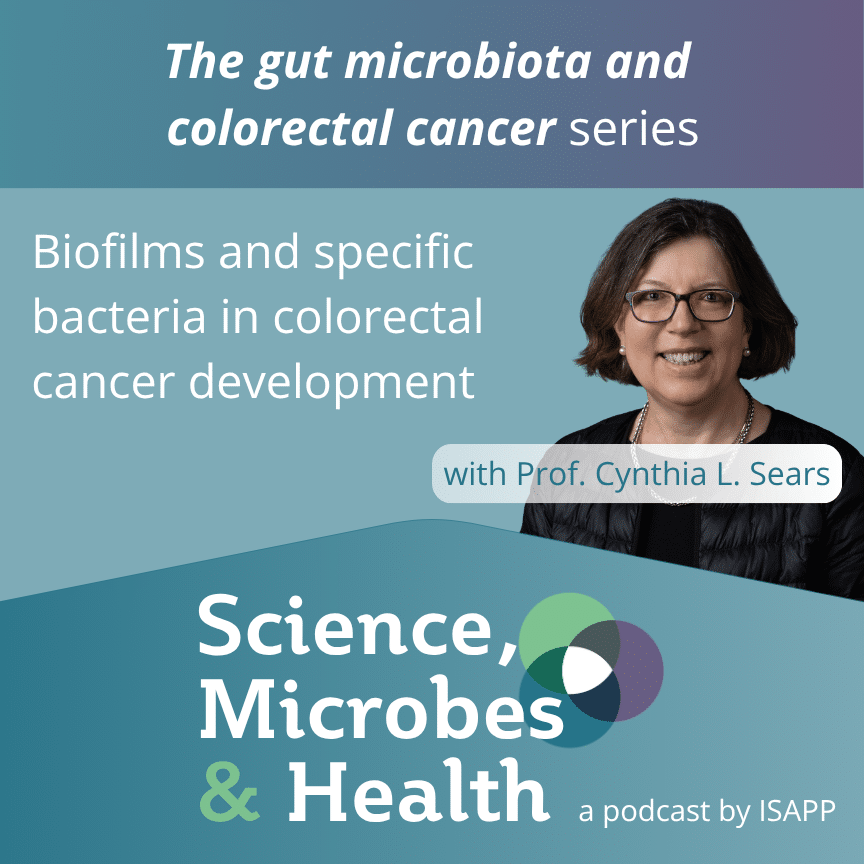
Biofilms and specific bacteria in colorectal cancer development, with Prof. Cynthia L. Sears, MD
 The Science, Microbes & Health Podcast
This episode features Prof. Cynthia L. Sears, MD from the Johns Hopkins University School of Medicine and the Bloomberg School of Public Health (USA), speaking about both biofilms and specific gut microorganisms that may contribute to colorectal cancer development. Initially, Prof. Sears became interested in enterotoxigenic Bacteroides fragilis in connection with colon cancer. Further investigation found complex biofilms with multiple bacteria fixed to the surface of the tumor. The biofilms were shown to be oncogenic, and they reassembled very quickly after antibiotic treatment. Interestingly, the biofilms were found to have C. difficile. A subset of the biofilms have a dominant amount of Fusobacterium, and the latest work shows that these bacteria are associated with advancing cancer, stage 2 or beyond. These bacteria and/or biofilms don’t necessarily trigger the onset of mutations that lead to colon cancer, but they accelerate tumor growth. Over time, the gut microbiota may be perturbed in various ways (including by antibiotics), allowing the organisms to create a niche for themselves that ultimately harms the colonic epithelial cells. Prof. Sears is optimistic about prevention strategies for colorectal cancer, such as a tool that helps predict risk in younger populations. Targeted prebiotics, too, show promise for encouraging the growth of beneficial bacteria that prevent the oncogenic species from finding a niche.
Publisher
The Science, Microbes & Health Podcast
Link
isappscience.org/resource/episode-84-biofilms-and-specific-bacteria-in-colorectal-cancer-development/
Published
July 25, 2026
Duration
30 min
Format
Podcast
Category
Issues · Science
Source
RSS feed
Host
International Scientific Association for Probiotics and Prebiotics (ISAPP)
#biofilms #specificbacteria #colorectalcancerdevelopment #lifesciences #medicine #nutrition
