
By this measure, America is actually a little less polarized these days
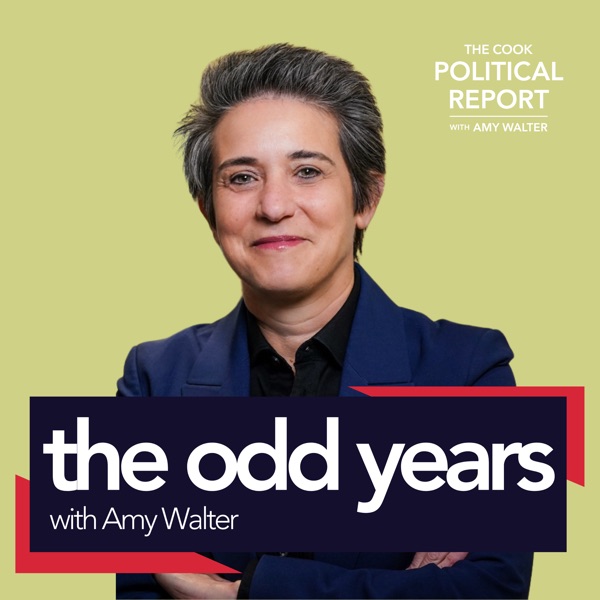 The Odd Years
Way back in the late 1990s, Cook Political Report founder Charlie Cook had an idea to rank all 435 congressional districts by their partisanship - in other words, whether a district is more Republican or more Democratic. That way, we'd be able to see, at a quick glance, which members of Congress represented districts that were either slightly or strongly partisan. For example, is a certain Republican representative in a very solid Republican seat…. or in one that is only slightly red… or even one that was blue or blue leaning? Thus was born the Cook PVI, which stands for Partisan Voting Index. And since 1998, CPR has released a new addition every two years. This admittedly very geeky undertaking is also something we get really excited about because it cannot only tell us the partisanship of every district, but with more than 25 years of data, we can see how districts have shifted over the years. The person behind the Cook PVI and how it all works is David Wasserman, The Cook Political Report’s senior editor and elections analyst. We invited him on to explain what the Cook PVI is, how we calculate it, what we learned from it for 2025, and what it may tell us about elections in 2026. We recorded this conversation on Wednesday, April 9th.
Publisher
The Odd Years
Link
www.cookpolitical.com/CPR-access/odd-years/oddpod?wchannelid=51oywt5d5k&wmediaid=0h6rgj0vac
Published
April 15, 2025
Duration
36 min
Format
Podcast
Category
News · News Commentary
Source
RSS feed
Host
The Cook Political Report with Amy Walter
#measure #america #lesspolarized #government
