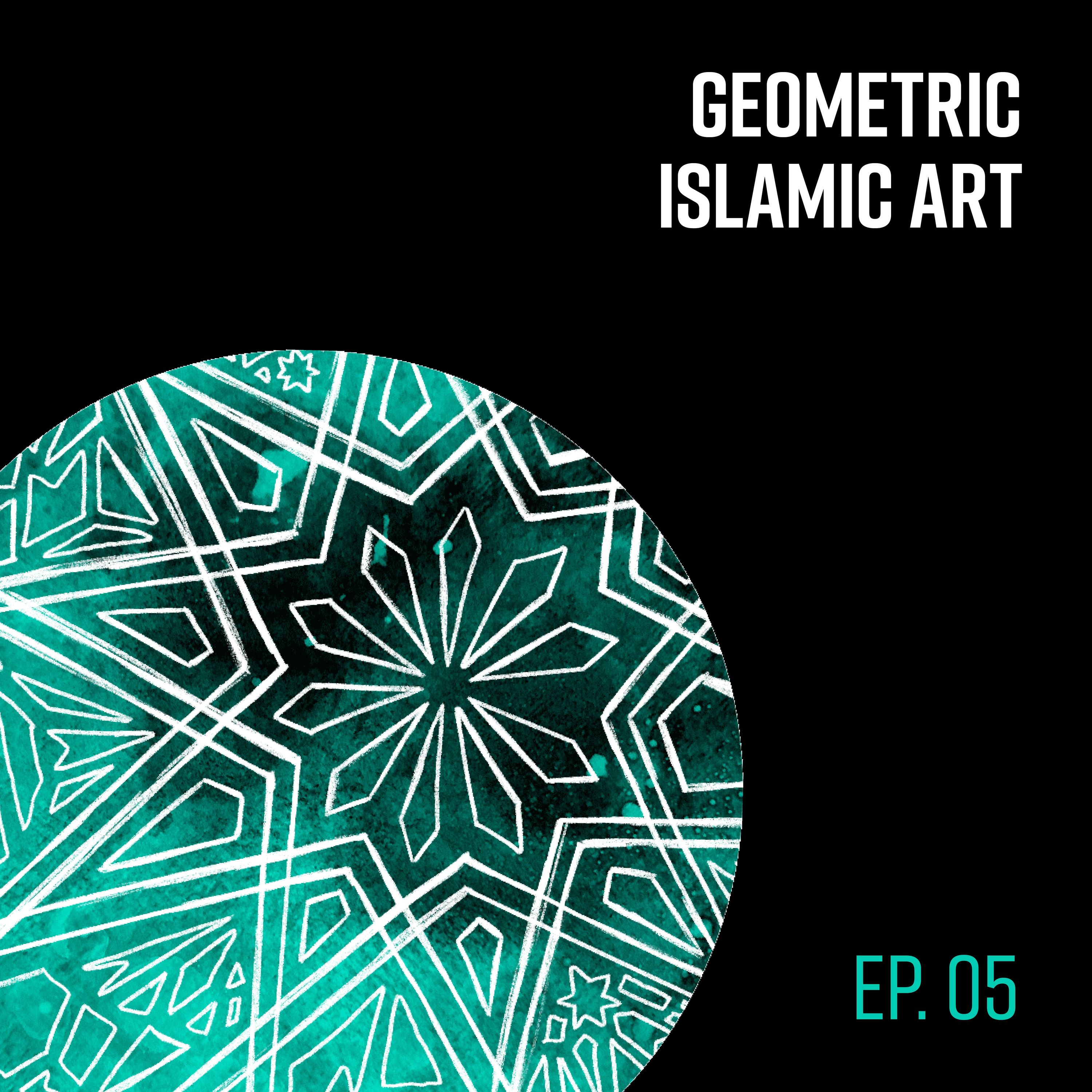
Geometric Islamic Art
Episode 5
TIMELINE * A broad timeline spanning centuries is used to account for imprecise dates in the Ottoman Empire from multiple sources. 14th Century (1300s): The beginning of the Ottoman Empire. This period marks the initial blending of Islamic art with Byzantine and Persian styles, forming the basis for the unique Ottoman artistic and traditional geometric elements appearing as a symbol of Islamic art. 15th Century (1400s): Further development of the Ottoman style, with increased prominence in mosques and palaces in Istanbul. 16th Century (1500s): The peak of Ottoman art. 1520-1566: Reign of Suleiman 1548: The Şehzade Mosque completed with the best geometric Suleymaniye Mosque (completed in 1557). 1570s-1598: The Qur'an's decoration is the primary artistic expression in the Ottoman Empire. 1600: 1600: This period sees advancements in ceramics known as Iznik tiles, textiles, calligraphy, and manuscript illumination. 19th Century (1800s): The decline of the Ottoman Empire. Western influences begin to appear in Islamic art, introducing new styles and techniques. Early 20th Century (1900s-1922): The end of the Ottoman Empire The Topic A general view of the perspective on Islamic art that was shaped throughout the Ottoman Empire's peak, particularly during Sultan Suleiman's reign. Istanbul, Turkey, became known for its exceptional display of geometric symbolism in Islamic art.
Publisher
Incomplet Design History
Link
incomplet-design-history.simplecast.com/episodes/geometric-islamic-art-6yVXopNJ
Published
October 10, 2024
Duration
12 min
Format
Podcast
Category
Lifestyle · Design
Source
RSS feed
Host
Amanda Horton
Incomplet Design History
@incompletdesignhistory
#geometricislamicart #design