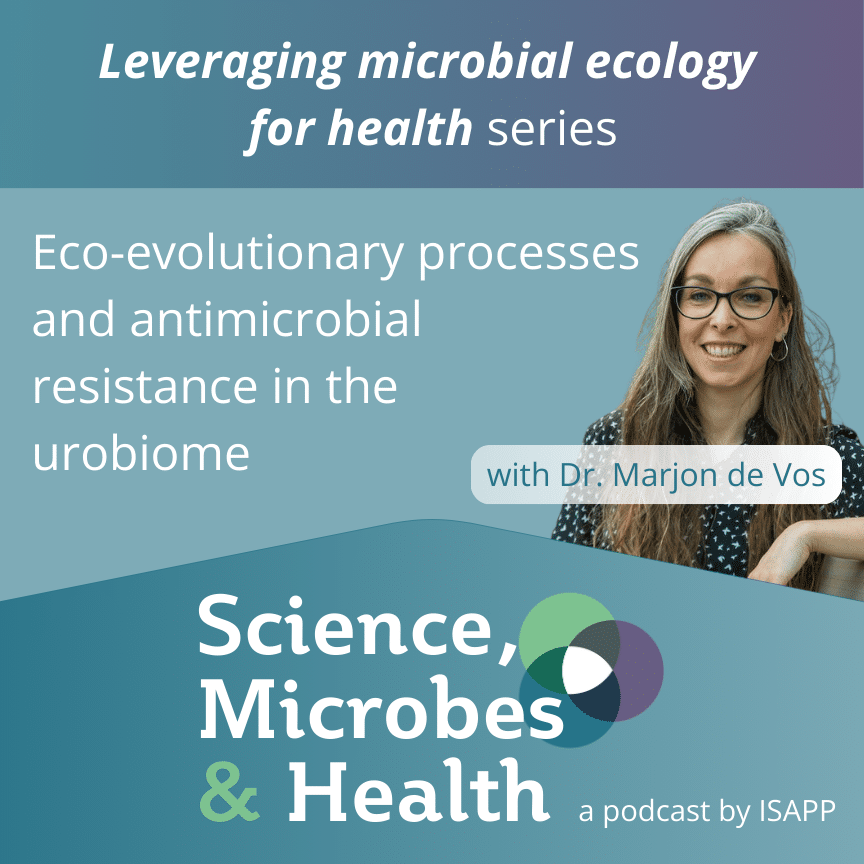
Eco-evolutionary processes and antimicrobial resistance in the urobiome, with Dr. Marjon de Vos PhD
 The Science, Microbes & Health Podcast
This episode features Dr. Marjon de Vos PhD from the University of Groningen (the Netherlands) speaking about microbial ecology and evolution, and in particular how these affect antimicrobial resistance. She studies the urobiome as well as the factors that contribute to urinary tract infections and successful treatment of these infections with antibiotics. Her lab combines molecular biology techniques with phenotypic and growth measurements, as well as computational modeling. She has found evidence of microbial interactions mediating evolutionary potential of microorganisms – for example, in vitro experiments showed that in the presence of Enterococcus, E. coli speeds up its rate of developing antimicrobial resistance. Thus, interactions within the bacterial ecosystem may affect pathogens’ sensitivity to antimicrobials. Prebiotics are a potential intervention: if bacteria that make a pathogen more susceptible to antimicrobials are already present in the urobiome, their numbers could be enhanced. Probiotics are another possibility. From a One Health perspective, such approaches are important to explore because they support antimicrobial stewardship and help maintain control of antimicrobials in the environment overall.
Publisher
The Science, Microbes & Health Podcast
Link
isappscience.org/resource/episode-68-eco-evolutionary-processes-and-antimicrobial-resistance-in-the-urobiome-with-dr-marjon-de-vos-phd/
Published
September 26, 2025
Duration
27 min
Format
Podcast
Category
Issues · Science
Source
RSS feed
Host
International Scientific Association for Probiotics and Prebiotics (ISAPP)
#evolutionaryprocesses #antimicrobialresistance #marjondevos #lifesciences #medicine #nutrition
