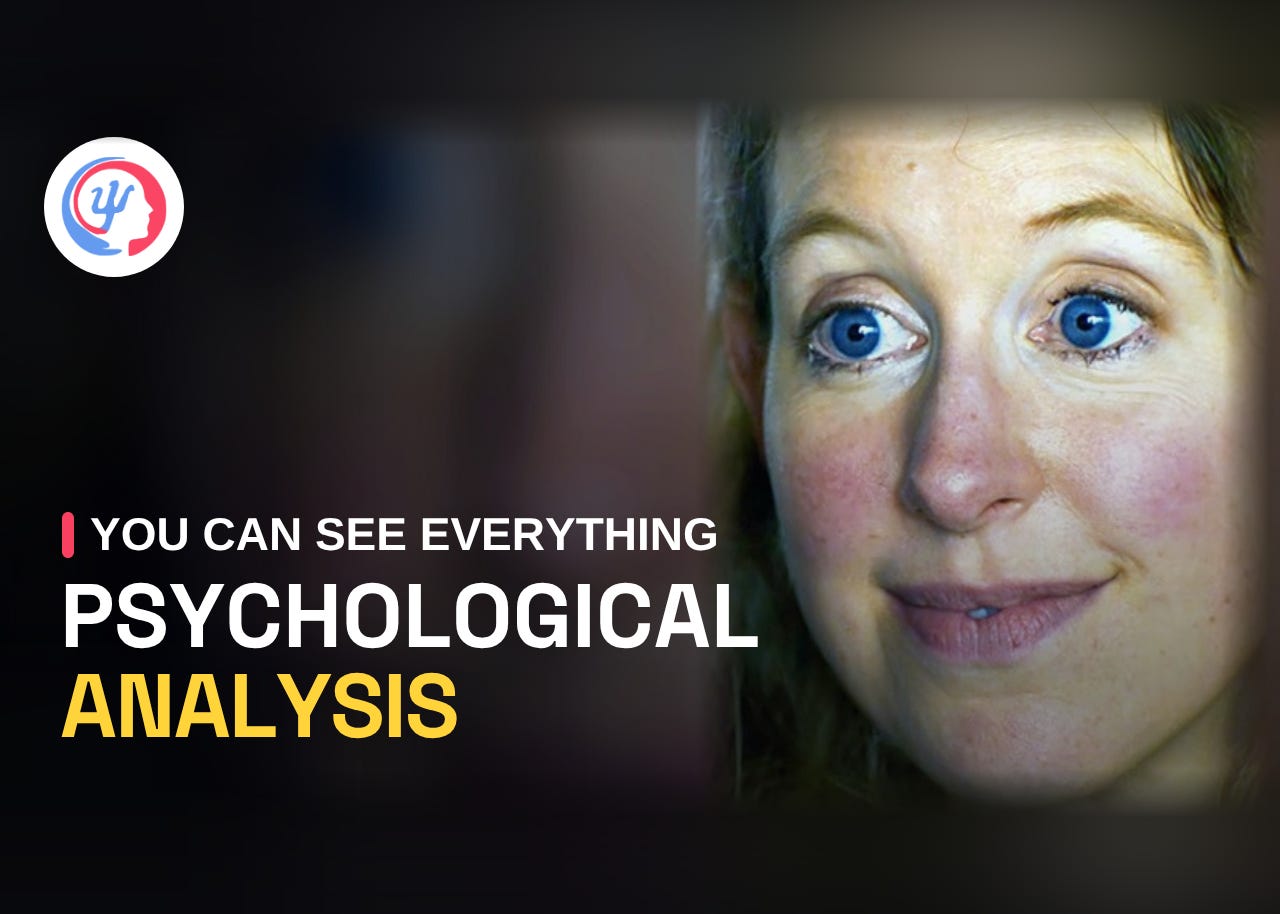
You Can See Everything Psychological Analysis by Clinical & Forensic Psychiatrists
You Can See Everything is one of the strangest films about Elizabeth Holmes yet, and in this episode two psychiatrists try to make sense of it. We explore what Nathan Fielder’s interviews bring out in Holmes and Billy Evans, from unusual facial expressions and her distinctive voice to the couple’s intense descriptions of love. Using psychoanalytic concepts such as narcissism, splitting, borderline personality organization, identity diffusion, and the “as-if personality,” we examine how people construct a sense of self and why someone might defend a version of reality that others find impossible to believe. We also ask what documentaries actually let us know about people, and how much of what we see is our own projection. Spoilers throughout. What we cover * How the hosts frame the discussion: independent commentary on public material, speculation rather than diagnosis, the Goldwater rule, and the film as a projective test because it is deliberately ambiguous. The episode contains spoilers. * Nathan Fielder's interviewing style in the film, with sparing words and expressive silence, as an example of clarification and confrontation, and the defenses people show when avoiding a line of questioning. * How Elizabeth Holmes appears on screen (restricted emotional reactivity, frequent smiling and nodding, a deep voice), whether it is a persona for the camera, and why any film frame removes context.
Publisher
Psychofarm Podcast
Link
psychofarm.substack.com/p/you-can-see-everything-psychological
Published
October 20, 2026
Duration
56 min
Format
Podcast
Category
Lifestyle · Mental Health
Source
RSS feed
Host
Psychiatry, Skepticism, and Integration.
Psychofarm Podcast
@psychofarmpodcast
#psychologicalanalysis #clinical #forensicpsychiatrists #mentalhealth #medicine
