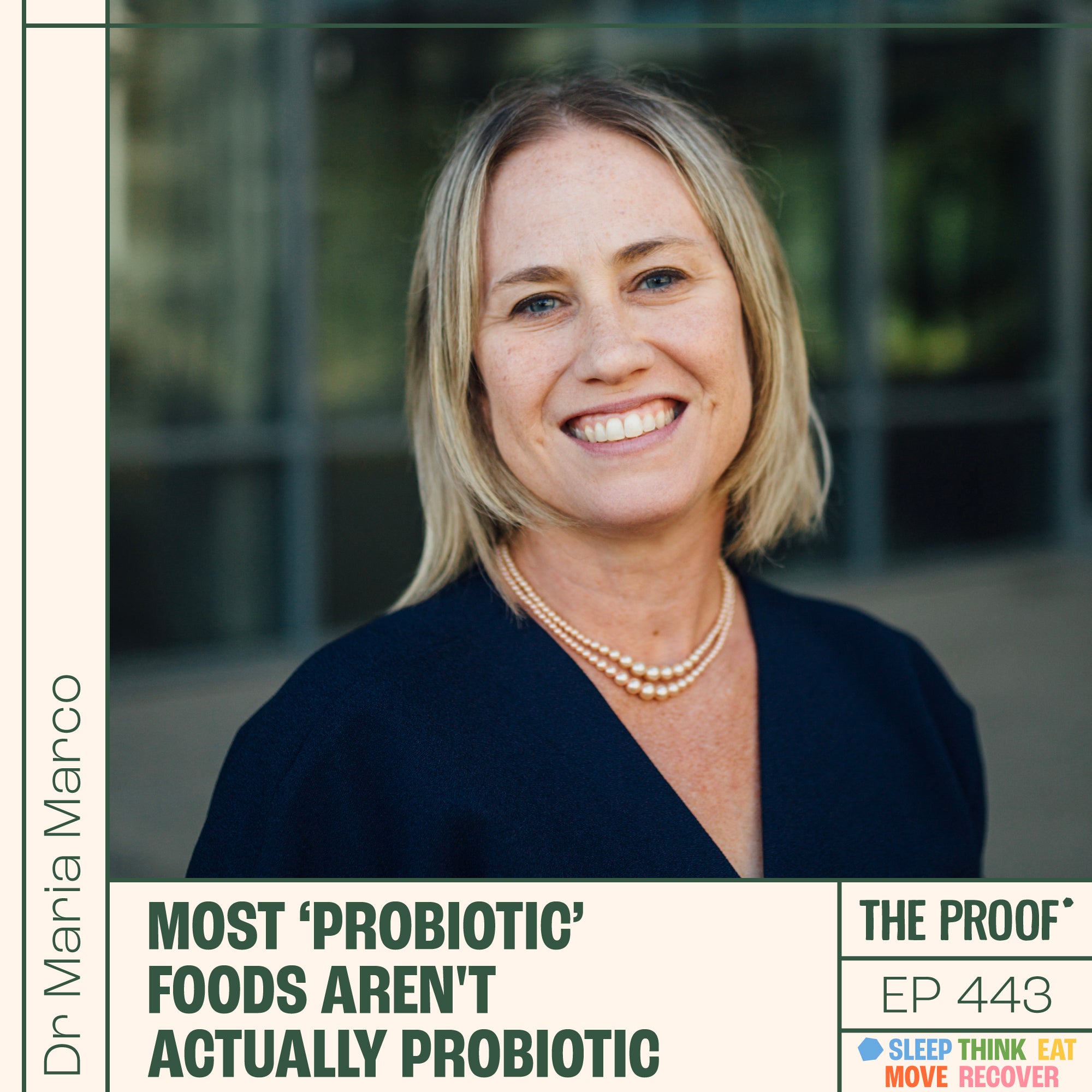
Most 'Probiotic' Foods Aren't Actually Probiotic | Dr Maria Marco
 The Proof with Simon Hill
The word gut health is on almost everything now, from yoghurt lids to supplement labels. So I asked food microbiologist Dr Maria Marco, Professor at UC Davis and President of the International Scientific Association for Probiotics and Prebiotics, what it actually means. She spent a year with a panel of clinicians, dieticians, and immunologists trying to define it, and the most striking finding was how much we still cannot measure. This is a conversation about the distance between the science and the marketing, and it includes some claims that will change how you read a label. What we cover The consensus definition of gut health, and why symptoms and pathology can point in opposite directions Whether commercial microbiome stool tests and diversity scores mean anything clinically Why sauerkraut sold as probiotic is, in Maria's words, "just a marketing thing" Whether the microbes in yoghurt survive digestion, colonise your gut, or simply pass through Why dead and pasteurised microbes may still be beneficial How to choose a probiotic that has actually been tested in people, and when to stop taking one Maria is unusually willing to say what we do not yet know, and in a field this commercially crowded, that honesty is worth a great deal. To connect with Dr Maria Marco, visit the Marco Lab at UC Davis, find her on LinkedIn, or follow her lab's work on Instagram at @eat.lac.project. If this episode was useful, please leave a rating and review on Apple Podcasts or Spotify.
Publisher
The Proof with Simon Hill
Link
theproof.com/most-probiotic-foods-arent-actually-probiotic-dr-maria-marco/
Published
October 29, 2026
Duration
1h 2m
Format
Podcast
Category
Lifestyle · Nutrition
Source
RSS feed
Host
Live better for longer
#probioticfoodsarent #probiotic #drmariamarco #nutrition #selfimprovement
