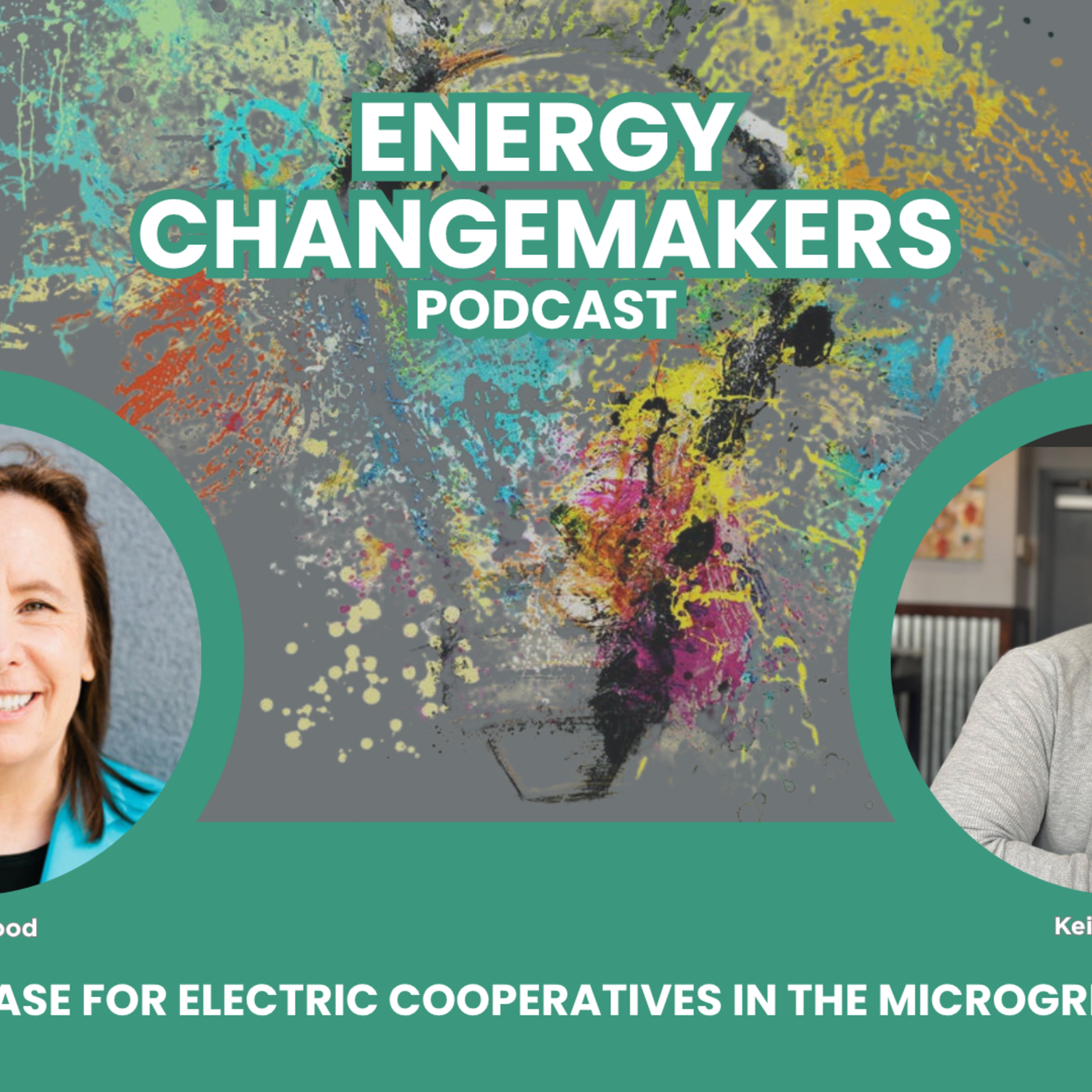
The Case for Electric Cooperatives in the Microgrid Era
Episode 55
What if the model to solve many of our biggest electricity problems already exists—we've just never used it to its full capacity? In this episode, Keith Taylor, a UC Davis institutional economist, makes the case that America's 800-plus co-ops are a form of "latent community capacity" hiding in plain sight. Keith proposes federating cooperatives so that they compete in the microgrid era, and what a Lake Tahoe utility crisis reveals about who really gets served when data centers come knocking. It's a hopeful, practical conversation about doing "policy from below." Look beyond the market and the state. Drawing on Nobel laureate Elinor Ostrom's insight that "there are no panaceas," Keith argues we systematically overlook the civic economy — a third leg of the stool alongside the market and government — where cooperatives operate on logics of service at cost rather than profit. We already have energy democracy. The U.S. has more than 800 electric cooperatives serving roughly 42 million Americans, generating about $42 billion a year in revenue. Of those members, some 8,000 serve as elected board directors — a political economy of its own that's ready to be leveraged, not built from scratch. Co-ops are often more efficient, not less. Investor-owned utilities serve about 30 households per mile of line; the average co-op serves about 7 — yet co-ops deliver comparable rates. In the 1930s, IOUs claimed lines would cost $2,000/mile; co-ops innovated the cost down to under $650/mile.
Publisher
Energy Changemakers Podcast
Link
podcasters.spotify.com/pod/show/energy-changemakers/episodes/The-Case-for-Electric-Cooperatives-in-the-Microgrid-Era-e3o7ufi
Published
September 2, 2026
Duration
41 min
Format
Podcast
Category
Issues · Tech News
Source
RSS feed
Host
Energy Changemakers
Energy Changemakers Podcast
@energychangemakerspodcast
#case #electriccooperatives #microgridera
