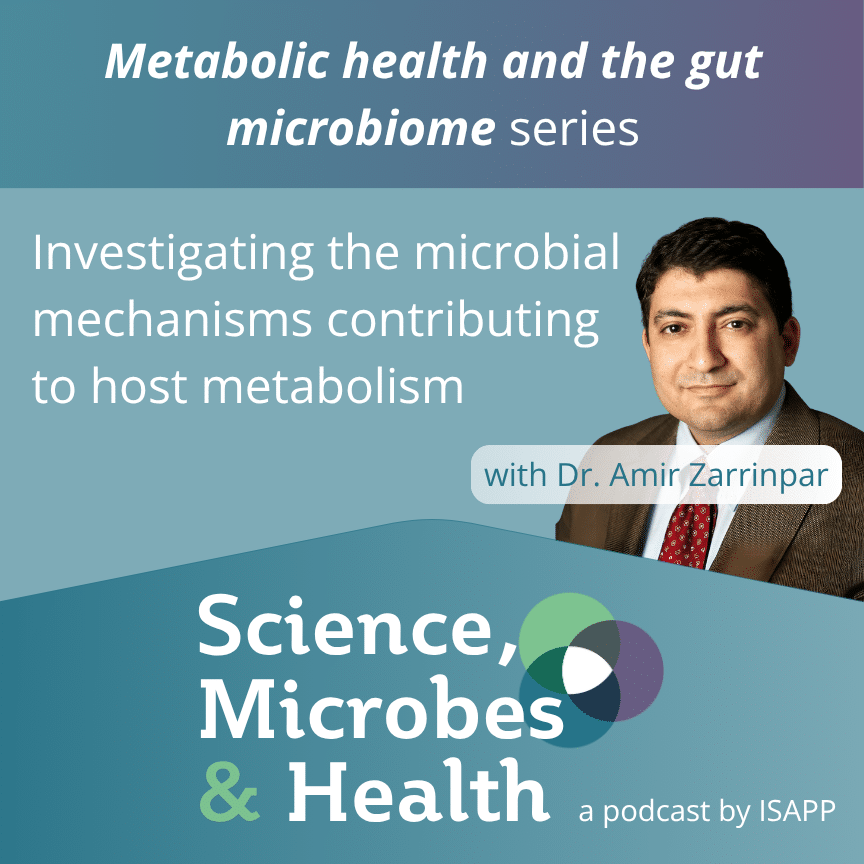
Investigating the microbial mechanisms contributing to host metabolism, with Dr. Amir Zarrinpar, MD PhD
 The Science, Microbes & Health Podcast
This episode features Dr. Amir Zarrinpar, MD PhD, from UC San Diego (USA) speaking about his work on circadian biology and host metabolism, and what’s currently known about microbial mechanisms. Dr. Zarrinpar explains that in mouse models, restricting feeding to the nocturnal (awake) period is important for their metabolic and overall health. When mice eat during the nocturnal period, the microbiome is very dynamic and essential for maintaining normal circadian rhythm. On a high-fat diet, they change their feeding timing and sleeping behavior simultaneously, and the microbiome fluctuations are disrupted. However, when mice experience time-restricted feeding they are protected from the deleterious consequences of the high-fat diet. The hypothesis is that the time-restricted feeding restores the normal circadian fluctuations of the microbiome. Even though the composition doesn’t change much, the microbes may be changing what they’re doing. Dr. Zarrinpar has used metatranscriptomics to find out what the microbes are actually doing (what genes they’re using), and saw patterns that correlated with time-restricted feeding, indicating that the microbiome may play a key role in the beneficial metabolic effects of time-restricted feeding. Overall, the host may be trying to interpret what’s happening in the environment through microbial signals. The key question to answer going forward is why certain microbe-derived signals prompt the host to alter its metabolic response.
Publisher
The Science, Microbes & Health Podcast
Link
isappscience.org/resource/episode-64-investigating-the-microbial-mechanisms-contributing-to-host-metabolism/
Published
July 3, 2025
Duration
28 min
Format
Podcast
Category
Issues · Science
Source
RSS feed
Host
International Scientific Association for Probiotics and Prebiotics (ISAPP)
#microbialmechanismscontributing #hostmetabolism #amirzarrinpar #lifesciences #medicine #nutrition
