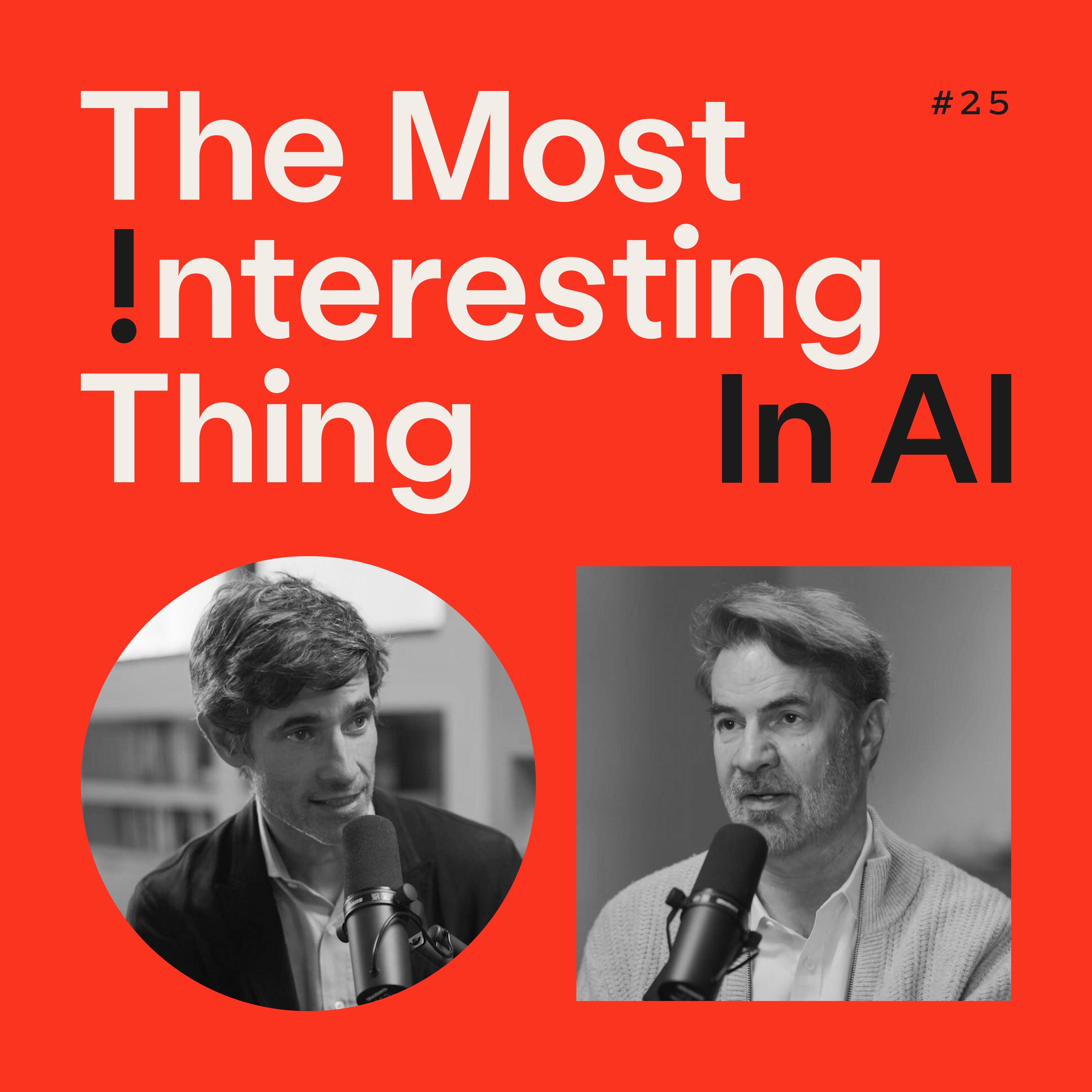
The AI Jobs Disruption - Erik Brynjolfsson with Nicholas Thompson
 The Most Interesting Thing in AI
Of all the potential risks and promises of AI, perhaps none are as immediately dire as this: How will it impact jobs? Will employers still need workers? What will it mean if the answer is “no?” Depending on who you’re talking to, the prospect of a future with fewer jobs is either liberating or terrifying. But for a more measured reaction, it helps to look at the data. Stanford economist Erik Bynjolfsson has done just that, drilling down into AI’s effects on employment, upskilling, output, and more. In a conversation with The Atlantic’s CEO Nichlas Thompson, Brynjolfsson goes through his studies of call centers and other AI-exposed fields, and the surprising findings that could bring some much-needed reality to our fears. (00:00) Introduction to Erik Brynjolfsson and his work on AI economics (02:51) How much is free AI actually worth? (05:25) Why isn’t powerful AI showing up in GDP? (06:48) Introducing GDP-B: A new metric to capture value from free digital goods (07:23) Why initial AI adoption often lowers output (09:05) Evidence of the J-curve turning: Call centers, software, and aggregate stats (14:48) Will AI create more jobs or destroy them? Understanding elastic vs. inelastic demand (19:36) Advice for students and workers: Focus on creating new value, not just efficiency (21:34) Why AI helps different skill levels differently in call centers vs.
Publisher
The Most Interesting Thing in AI
Published
May 27, 2026
Duration
1h 2m
Format
Podcast
Category
Issues · Tech News
Source
RSS feed
Host
Atlantic Re:think
#aijobsdisruption #erikbrynjolfsson #nicholasthompson
