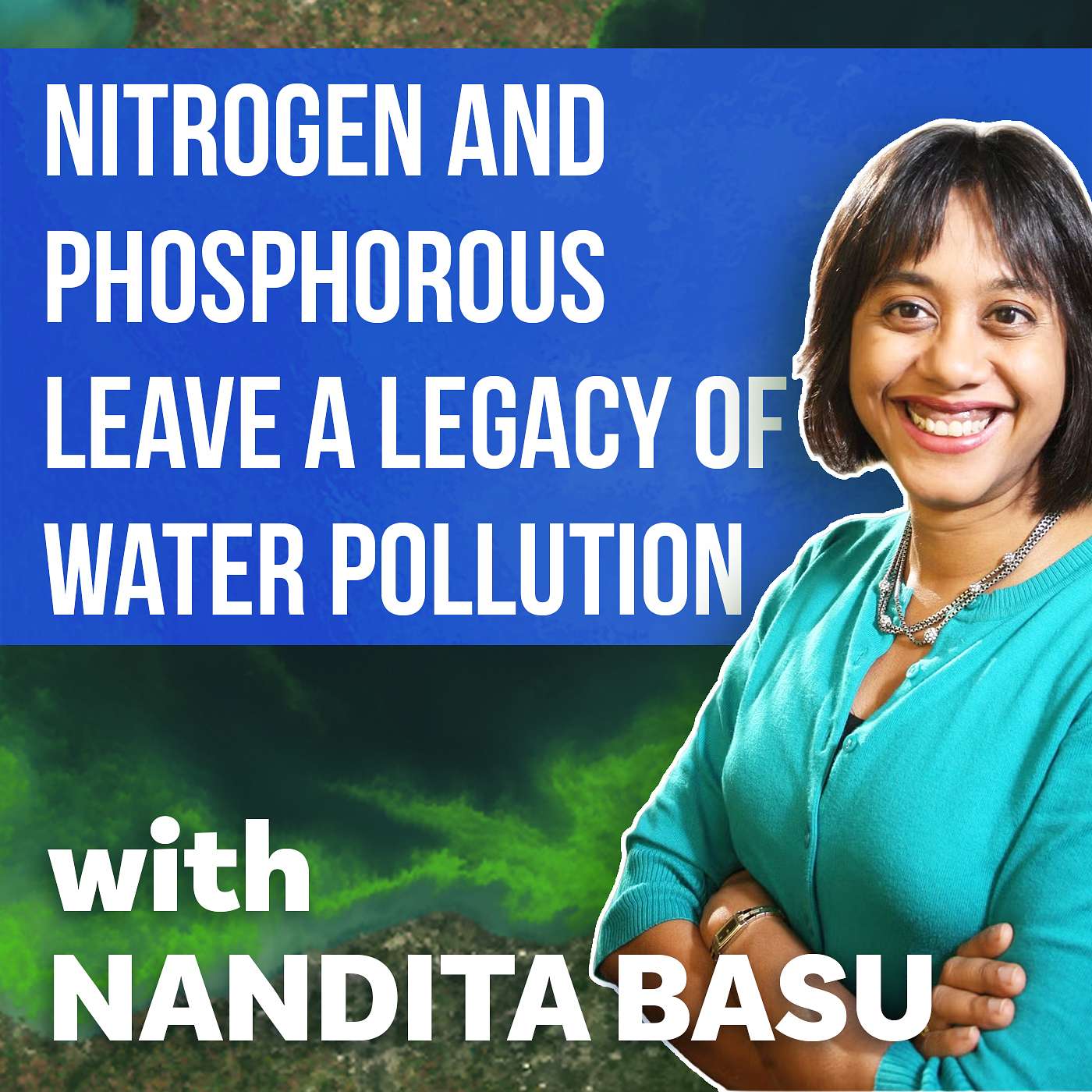
Nitrogen and Phosphorous Leave a Legacy of Water Pollution | Nandita Basu
 The Water Data Podcast
When a lake turns green with algae, or nitrate shows up in drinking water, the most obvious question would be: Why can’t we fix this quickly? In this episode of the Water Data Podcast, Veena Srinivasan speaks with Professor Nandita Basu from the University of Waterloo about nitrogen and phosphorus legacies – the hidden nutrient stores in soils, groundwater, and sediments that keep polluting waterways for decades. They unpack how the Haber-Bosch process transformed agriculture, why nitrogen use efficiency stays low, and how drained agricultural landscapes can rapidly transport nitrates from fields to major river systems and even the Gulf of Mexico. They also explore why phosphorus behaves differently - sticking to soils and sediments, fuelling algal blooms, and creating stubborn feedback loops when lakes turn low-oxygen. Finally, they discuss what can still be done: turning the ‘easy knobs’ like phosphate in detergents, targeting livestock manure hotspots, using small ponds and wetlands as high-impact interventions, and why India urgently needs far more empirical measurement to diagnose problems and track solutions. The Water Data Podcast is a talk show on the science, systems, and stories of water hosted by Veena Srinivasan. For all references and further readings related to the episode, visit ________ Subscribe to The Water Data Podcast on your favourite podcast app – and catch video episodes on the WELL Labs YouTube channel @welllabs.
Publisher
The Water Data Podcast
Link
welllabs.org/wdp-nandita-basu/
Published
January 6, 2026
Duration
1h 8m
Format
Podcast
Category
Issues · Science
Source
RSS feed
Host
WELL Labs
#phosphorousleave #waterpollution #nanditabasu #earthsciences #nature #socialsciences
