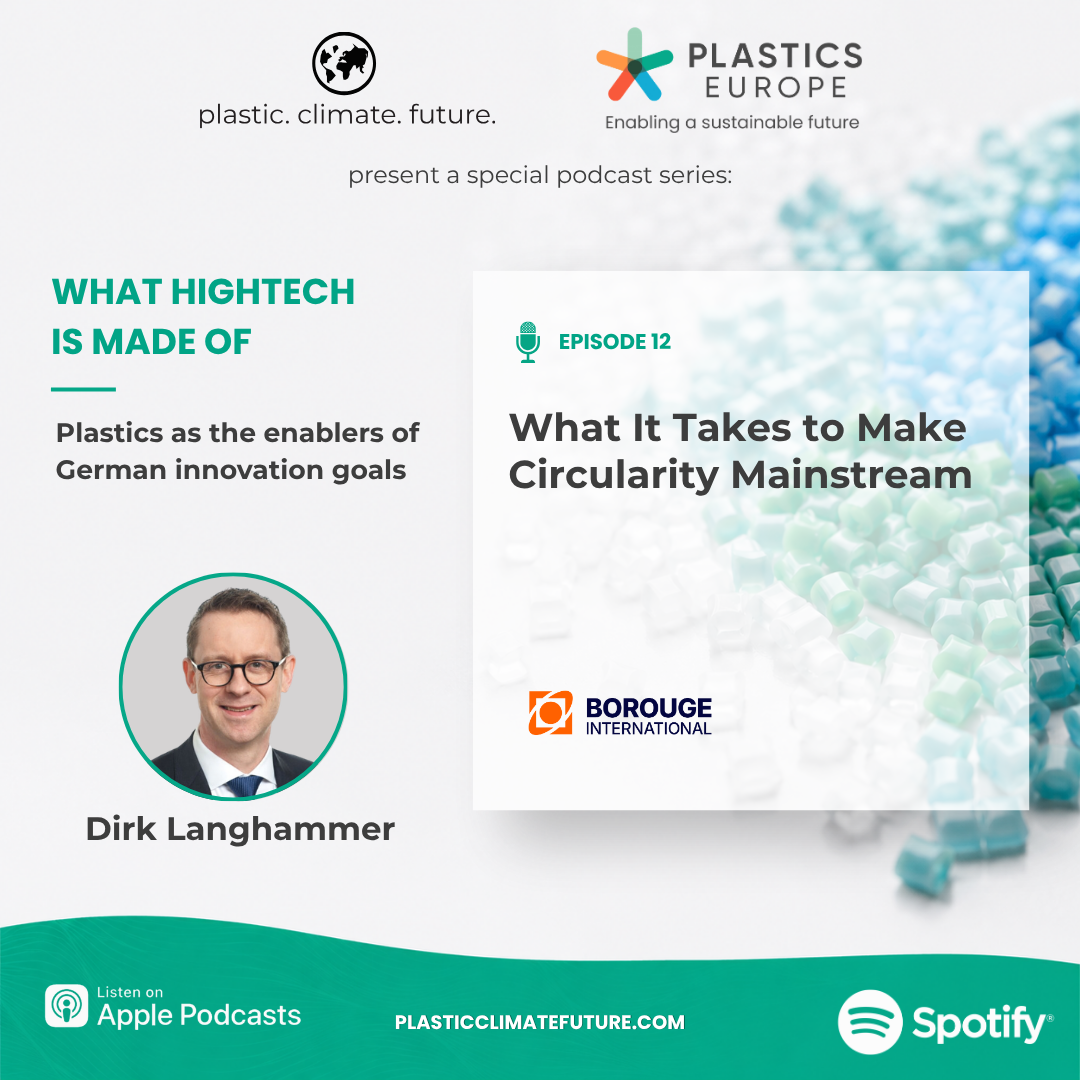
What It Takes to Make Circularity Mainstream
 Plastic. Climate. Future.
Circular plastics are no longer just a sustainability ambition. They are becoming a strategic business opportunity. But what will it take to move from early adopters to industry-wide adoption? In the latest episode of our series with Plastics Europe Deutschland, we speak with Dirk Langhammer from Borouge International about the future of circular plastics and what needs to happen to make circularity the norm rather than the exception. From mechanical and chemical recycling to renewable and CO₂-based feedstocks, the technologies are evolving. But technology alone isn't enough. Scaling circularity requires market demand, investment, collaboration across the value chain and a regulatory framework that creates long-term certainty. We discuss: Why mechanical recycling remains the backbone of circular plastics — and where newer technologies can complement it How mandatory recycled-content targets can create demand and unlock investment across the circular value chain Why Europe is leading the circular transition in some areas, but bureaucracy and slow approval processes risk holding back progress How brands, recyclers and material producers can work together to make circular solutions commercially attractive For Dirk, the outlook is optimistic. Circularity isn't just about reducing environmental impact. It's also about cost efficiency, reliable supply chains and resource security. The opportunity is there. The technologies are developing.
Publisher
Plastic. Climate. Future.
Link
www.plasticclimatefuture.com/podcast/borouge-international
Published
October 13, 2026
Duration
34 min
Format
Podcast
Category
Issues · Science
Source
RSS feed
Host
Mat Wielopolski & John Sewell
#takes #circularitymainstream #chemistry #entrepreneurship
