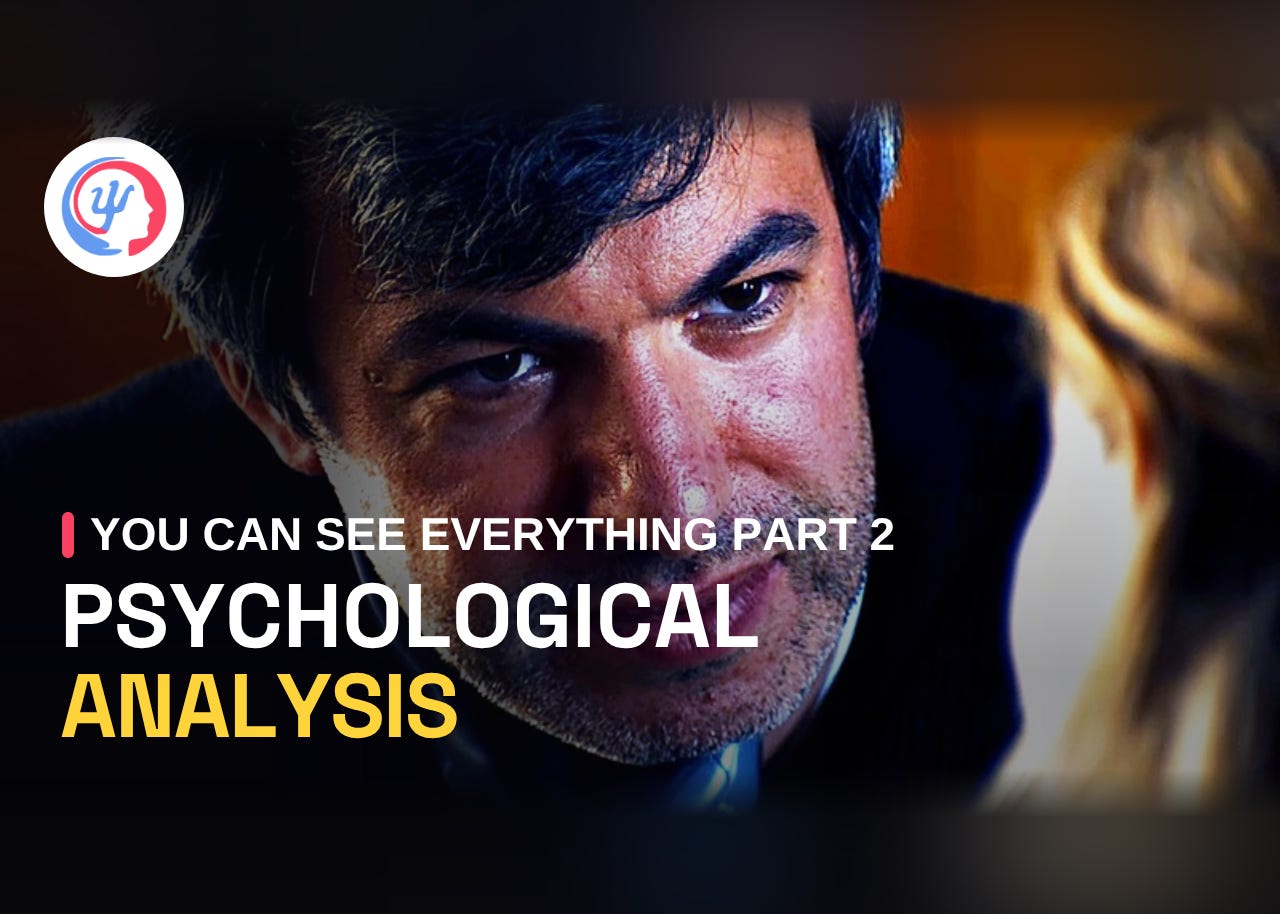
The Psychology of Elizabeth Holmes in You Can See Everything: Narcissism, Autism, or Manipulation?
You Can See Everything psychological analysis returns in Part 2 as two psychiatrists revisit Elizabeth Holmes, Billy Evans, and Nathan Fielder’s documentary. We examine the scenes that divided viewers, from the Abbott and Costello joke and Holmes’s statements about Theranos to Billy’s egg-mixing, social media posts, and comments about revenge. Along the way, we discuss narcissism, psychopathy, autistic traits, and the difference between personality traits and psychiatric disorders. We also explore why people repeat familiar relationship dynamics and how a film can become a mirror for the audience’s own assumptions. This is a discussion of psychological ideas, not an attempt to diagnose the people on screen. What we cover * A caution at the outset about medicalizing behavior that is within the normal range or rationally driven, and why a diagnosis, willful action and moral responsibility are three separate questions. * The tendency to repeat, discussed as Freud's repetition compulsion (a bid for mastery) and as habit and homeostasis, followed by Eric Berne's transactional analysis and its recurring sequence of roles and payoffs mapped onto the film. * Overdiagnosis and the case for talking about traits rather than broad labels, using autism as the example, and whether autism could explain the Abbott and Costello joke and the statements about the Theranos machine.
Publisher
Psychofarm Podcast
Link
psychofarm.substack.com/p/the-psychology-of-elizabeth-holmes
Published
October 28, 2026
Duration
1h 6m
Format
Podcast
Category
Lifestyle · Mental Health
Source
RSS feed
Host
Psychiatry, Skepticism, and Integration.
Psychofarm Podcast
@psychofarmpodcast
#psychology #elizabethholmes #manipulation #mentalhealth #medicine
