The Nuclear Reaction Keeping Pluto's Ocean Alive
Episode 22
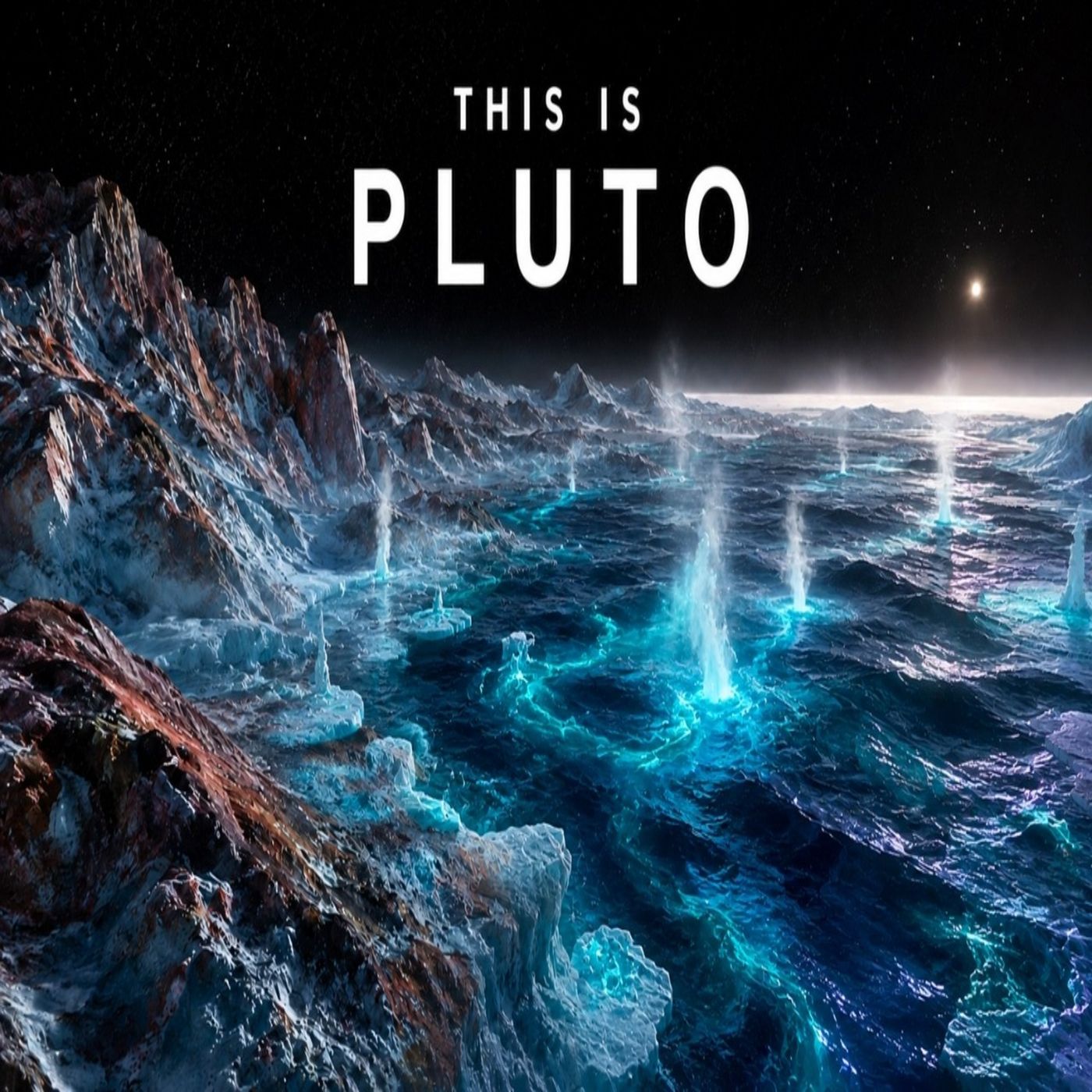
What if one of the coldest worlds in the solar system is hiding an ocean beneath its frozen surface? 🌌 Pluto lies about 3.67 billion miles from the Sun, where sunlight is incredibly weak and surface temperatures can fall to around -380°F. Yet beneath its ancient crust, scientists have found evidence suggesting that a vast subsurface ocean may still exist, potentially around 100 miles deep. So where does the heat come from? In this episode, we travel deep beneath Pluto's frozen surface to explore the remarkable process that may keep its hidden ocean liquid. The answer is not sunlight, and it is not the powerful tidal forces found on moons like Europa or Enceladus. Instead, Pluto may be heated from within by the slow radioactive decay of elements such as uranium, thorium, and potassium. These long-lived radioactive elements have been releasing tiny amounts of heat for billions of years. Over immense stretches of time, that persistent energy may be enough to maintain liquid water beneath hundreds of miles of insulating ice. When NASA's New Horizons spacecraft reached Pluto in 2015, it revealed a world that looked nothing like the dead ice ball scientists had expected. Smooth nitrogen plains, enormous water-ice mountains, flowing nitrogen glaciers, atmospheric haze, and geological features all pointed toward a surprisingly active world. And beneath it all may be an ocean that has survived for most of the solar system's history.
Publisher
Snoozy Space
Link
youtu.be/qv1q01RXzAg
Published
October 30, 2026
Duration
1h 50m
Format
Podcast
Category
Issues · Science
Source
RSS feed
Host
Mr Snoozy
Snoozy Space
@snoozyspace
#nuclearreactionkeeping #astronomy #physics
