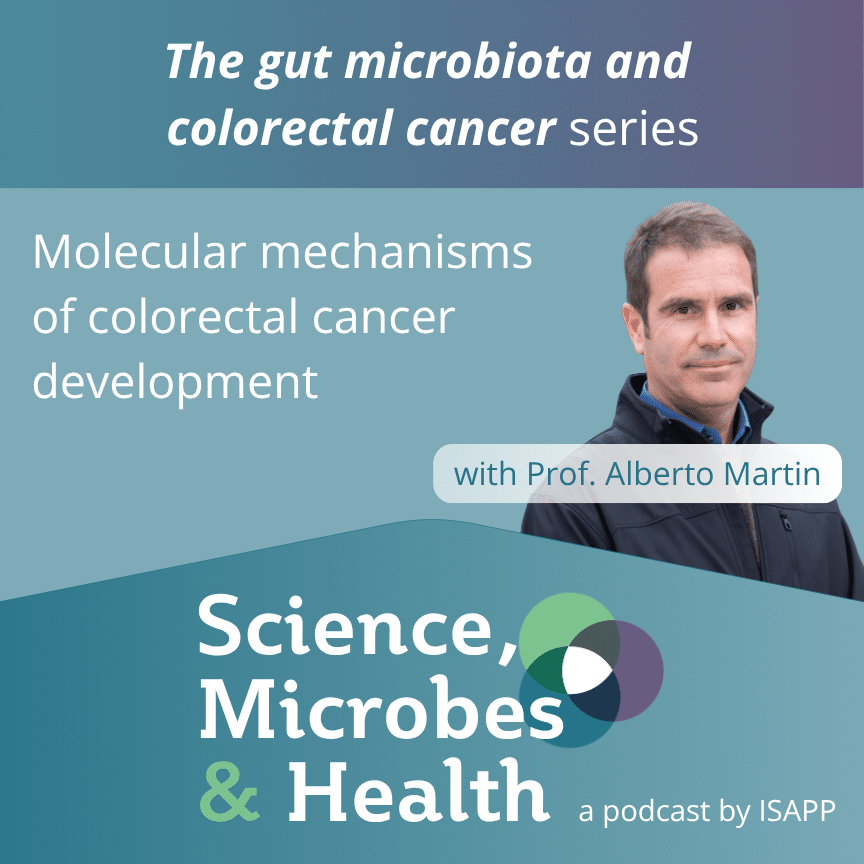
Molecular mechanisms of colorectal cancer development, with Prof. Alberto Martin PhD
 The Science, Microbes & Health Podcast
This episode features Prof. Alberto Martin from University of Toronto (Canada), speaking about the molecular mechanisms by which certain bacteria – namely, pks+ E. coli – influence colorectal cancer development. pks+ E. coli secretes a toxin that causes DNA damage; likely its purpose is to keep other microorganisms in check, but it appears to have the effect of promoting colorectal cancer. A low-fiber diet starves mucolytic bacteria, reducing the mucus layer in the gut and allowing pks+ E. coli to come into contact with the colonic epithelial cells, where they secrete the toxin that causes DNA damage. Gut inflammation also factors in, because these bacteria thrive in an inflammatory environment. Interestingly, in looking at the geographic distribution of this microorganism in people around the world, its presence correlates with colorectal cancer rates. Prof. Martin’s lab has clinical trials planned to explore this connection, and other groups are looking at therapies to reduce this microorganism in the gut. Episode abbreviations and links: Paper on diet and pks+ E. coli interactions in colorectal cancer development: Dietary fibre counters the oncogenic potential of colibactin-producing Escherichia coli in colorectal cancer Paper showing a large proportion of bacterial isolates from IBD patients had DNA-damaging agents: Commensal microbiota from patients with inflammatory bowel disease produce genotoxic metabolites Paper showing correlation of pks+ E.
Publisher
The Science, Microbes & Health Podcast
Link
isappscience.org/resource/episode-86-molecular-mechanisms-of-colorectal-cancer-development/
Published
August 20, 2026
Duration
30 min
Format
Podcast
Category
Issues · Science
Source
RSS feed
Host
International Scientific Association for Probiotics and Prebiotics (ISAPP)
#molecularmechanisms #colorectalcancerdevelopment #albertomartinphd #lifesciences #medicine #nutrition
