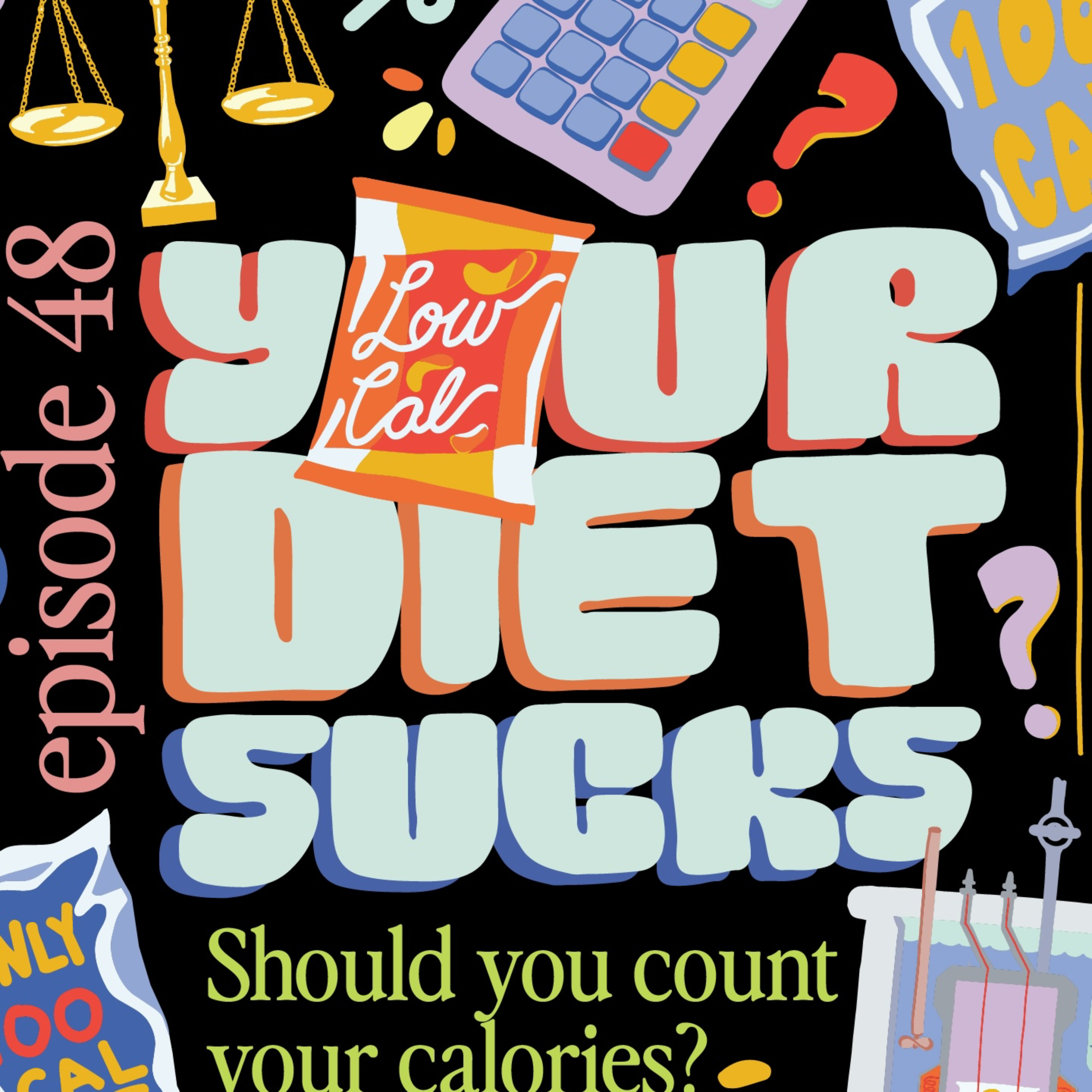
Should You Count Calories? The Wild History and Questionable Science Behind Calorie Counting
 Your Diet Sucks
Should you count calories? A century ago, a Los Angeles doctor named Lulu Hunt Peters sold two million copies of a book that taught American women to count calories as a patriotic duty during WWI. She invented the 100-calorie snack pack. She set the 1,200-calorie floor that still haunts diet apps in 2026. The framework she popularized is still running your relationship with food. This week, Zoë and Kylee dig into the question every active person has wondered about: should you be counting calories? They trace how a unit of heat invented to measure factory worker rations became the dominant logic of American eating. Where the 2,000-calorie label on every food package actually came from (it isn't science, it's a 1990 design choice). Why calorie counting is legally allowed to be 20 percent wrong before it ever reaches your plate. And why a framework with this many cracks has held on for a hundred years. Along the way: what calorie counting did to the American food supply during the low-fat era, what the Biggest Loser metabolic adaptation research actually showed, why even registered dietitians can't accurately track their own intake, what set point theory says about why restriction backfires, and whether calorie tracking apps are tools, traps, or both. For athletes, the questions that actually matter for performance, and what the research says about who calorie counting helps and who it harms.
Publisher
Your Diet Sucks
Link
podcasters.spotify.com/pod/show/microcosm-coaching0/episodes/Should-You-Count-Calories--The-Wild-History-and-Questionable-Science-Behind-Calorie-Counting-e3j9puo
Published
May 13, 2026
Duration
1h 30m
Format
Podcast
Category
Lifestyle · Nutrition
Source
RSS feed
Host
Zoë Rom
#countcalories #questionablescience #caloriecounting #nutrition
