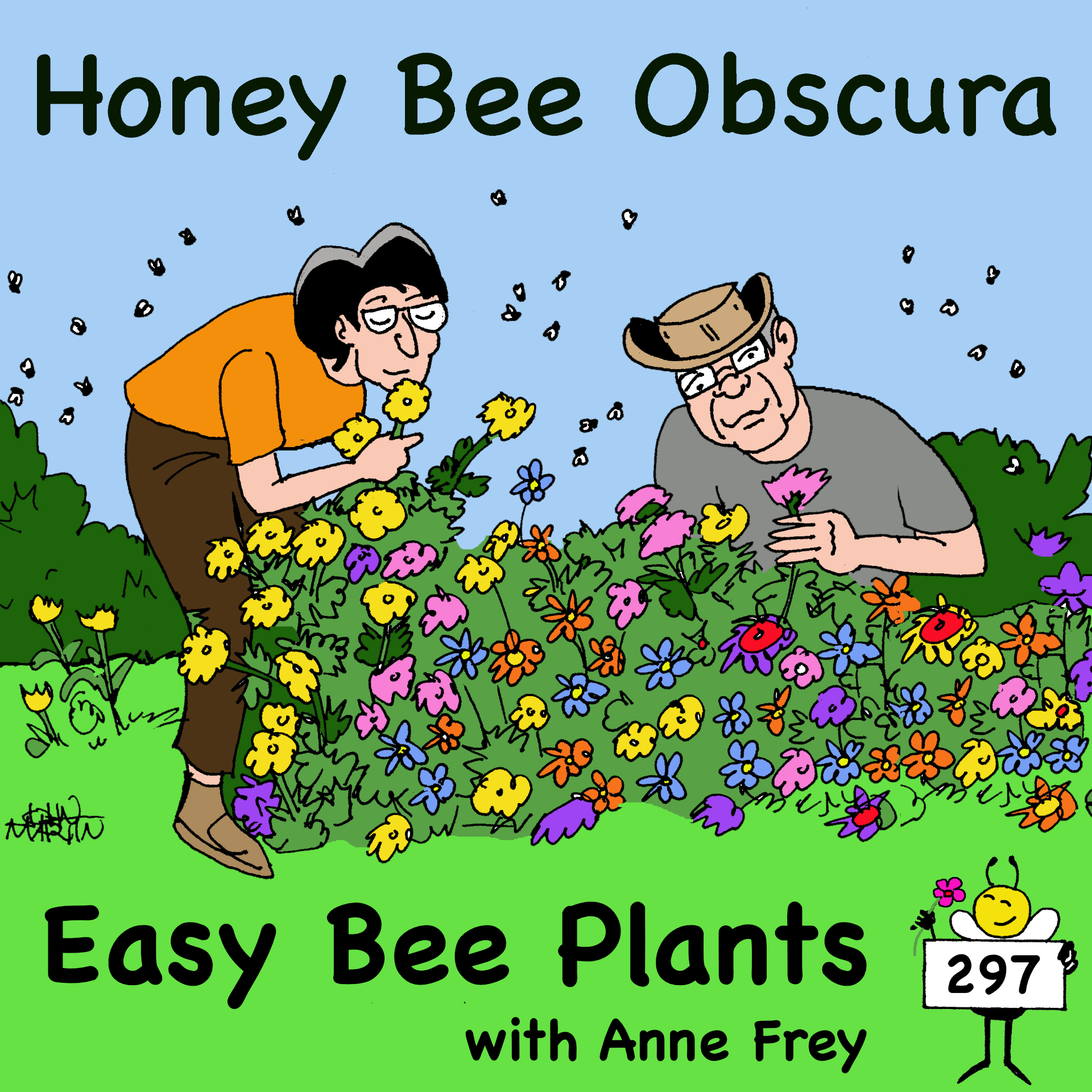
Easy Bee Plants with Anne Frey
 Honey Bee Obscura Podcast
What can the average beekeeper realistically plant to help honey bees and other pollinators? Jim Tew is joined by Anne Frey of Betterbee for a practical and sometimes wandering—in the best possible way—conversation about bee forage. They begin with the idea of planting wildflowers and quickly confront the question of scale. If meaningful forage can require substantial acreage, what can a beekeeper with an ordinary backyard actually accomplish? Anne suggests thinking beyond wildflower plots. A single well-chosen tree, such as an American basswood or linden, can provide an impressive concentration of flowers when it blooms. Jim recalls basswood honey from his years in Maryland and shares the story of a nearby 250-acre farm planted entirely in sunflowers—a spectacular sight that attracted people as readily as it attracted pollinators. They also talk about soybeans, tulip poplar, bee-bee tree (Evodia), and the temptation beekeepers sometimes have to plant anything honey bees find attractive. That leads to an important caution: a plant being good forage doesn't necessarily mean it belongs in your landscape. Some highly attractive plants can also be invasive. Ultimately, Jim and Anne arrive at perhaps the easiest approach of all: when possible, leave some land wild. Locally adapted flowering plants—or what we often dismiss as weeds—may provide more benefit than an introduced wildflower mix. And a perfectly manicured lawn?
Publisher
Honey Bee Obscura Podcast
Link
honeybeeobscura.com/297-easy-bee-plants
Published
August 20, 2026
Duration
20 min
Format
Podcast
Category
Issues · Science
Source
RSS feed
Host
Jim Tew
#beeplants #annefrey #hobbies #lifesciences
