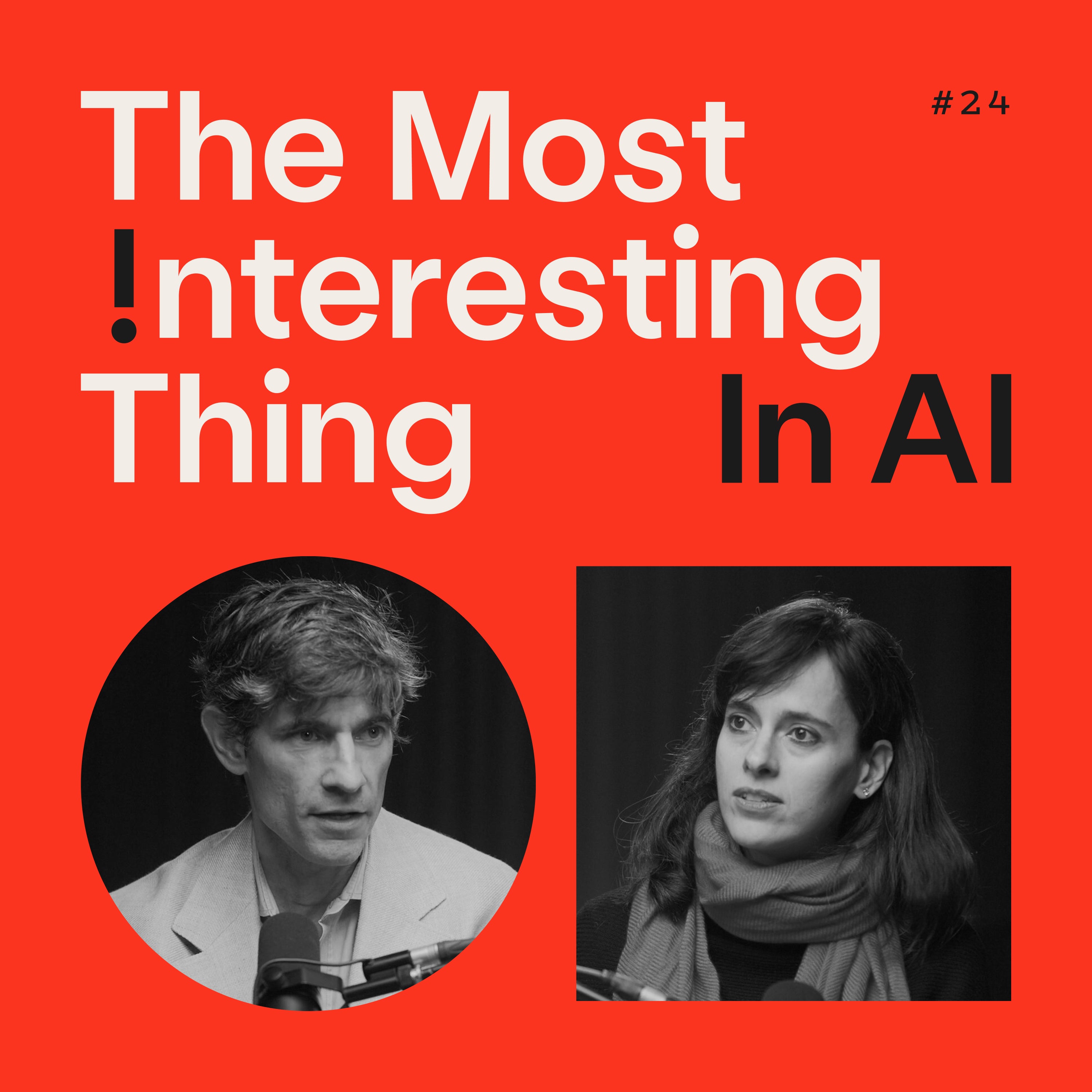
The Limits of Predictive AI - Carissa Véliz with Nicholas Thompson
 The Most Interesting Thing in AI
Can AI predict a person’s future? It’s a promise often made by sales teams, but the technology’s record is far from spotless. Even if it did achieve perfect foresight, a practically-clairvoyant AI might be incompatible with democracy, says Oxford philosopher Carissa Véliz. In a spirited conversation with Nicholas Thompson, CEO of The Atlantic, Véliz traces the history of predictions from ancient oracles to the modern algorithms shaping everything from criminal sentencing to insurance premiums. What are the ethics of outsourcing such consequential decisions to machines? The risks of getting it wrong are obvious. Véliz warns of the dangers of getting it right. (00:00) Introduction to Carissa Véliz and her work on privacy and AI (01:29) Why "less crime" is an illusion of safety (02:30) How surveillance machinery enables prediction and social control (03:06) Defense of autonomy: why resisting surveillance protects freedom (04:02) Can mass surveillance ever be beneficial? (05:36) Ring cameras and the erosion of democratic anonymity (07:01) Prediction versus prophecy: how forecasts shape reality (08:52) Job displacement predictions and self-fulfilling prophecies (13:15) The Gettier problem: why probabilistic AI lacks justification (16:06) When probabilistic AI works and when it fails (18:52) Do individualized health predictions defeat the purpose of insurance?
Publisher
The Most Interesting Thing in AI
Published
May 20, 2026
Duration
48 min
Format
Podcast
Category
Issues · Tech News
Source
RSS feed
Host
Atlantic Re:think
#predictiveai #carissa #nicholasthompson
