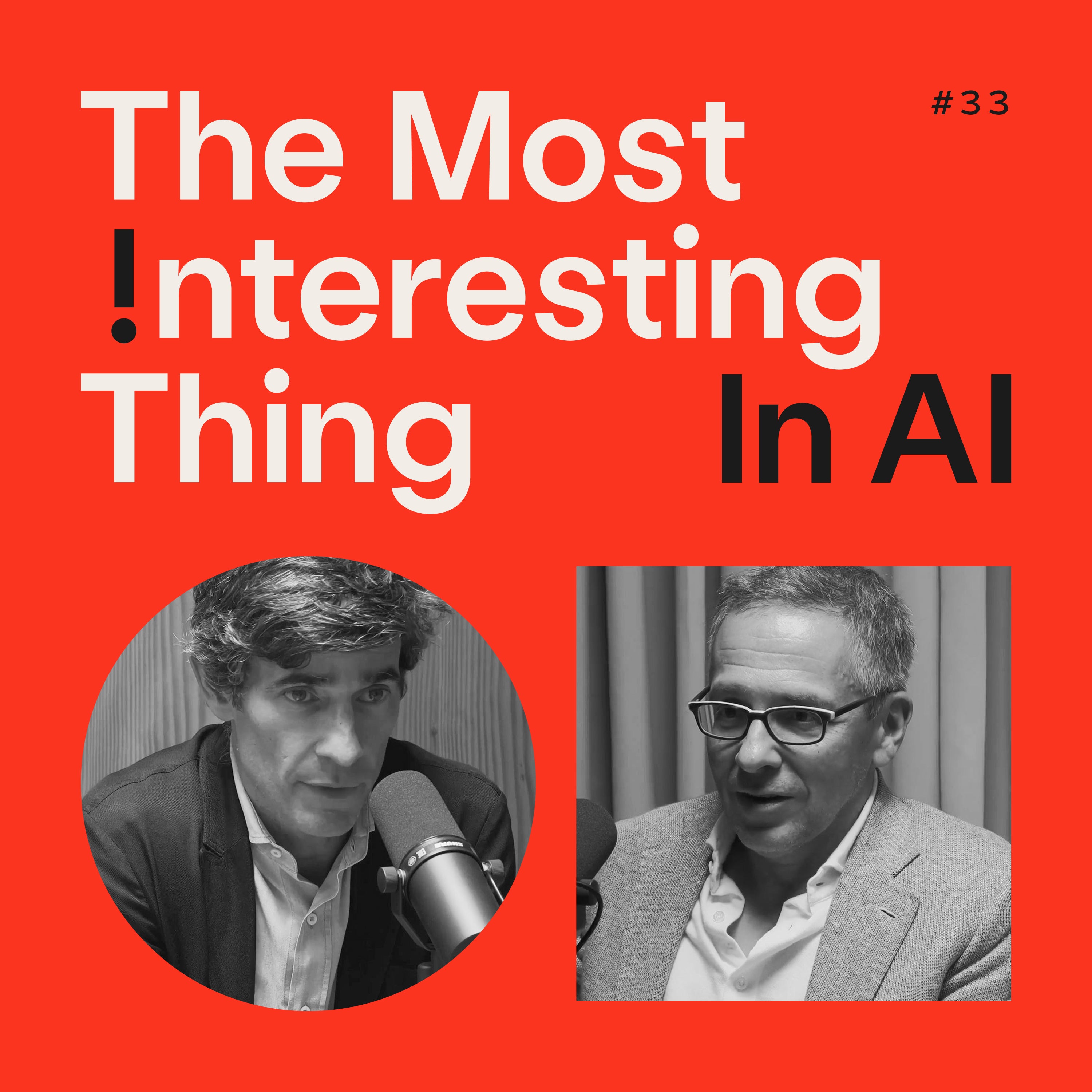
How AI Could Upend Global Politics - Ian Bremmer with Nicholas Thompson
 The Most Interesting Thing in AI
AI may have leveled the playing field in coding and app development, but it’s also put potentially dangerous tools in reach of nefarious actors. Now, empowered by AI, state-backed intelligence agencies and non-state actors alike can access tools that enable everything from mass surveillance to cyberattacks to bioweapon development. This dynamic could lead to a catastrophe, warns Eurasia Group’s Ian Bremmer. In conversation with Nicholas Thompson, CEO of The Atlantic, Bremmer describes the risks of open-source AI, the opportunities for international collaboration (including an “AI stability board”), and how to increase investment in safety and alignment. Will AI cause socially-destabilizing inequality? What are the chances it helps democracy rather than hurt it? And how concerned should we be about AI companions? Produced independently of The Atlantic’s editorial staff. Supporting sponsor: PwC. (00:00) Introduction (02:04) Why cyberattacks aren’t the primary threat of AI (05:58) What we should (and shouldn't) take away from the Mythos incident (08:53) How AI could enable the creation of bioweapons within a year (13:32) The surveillance trilemma: balancing existential risk mitigation, privacy rights, and open-source freedom (16:11) Could a FINRA-style global AI stability board enforce safety standards? (19:54) Why market dynamics alone cannot ensure AI safety (23:14) Could a US-China bilateral agreement be enough to address governance?
Publisher
The Most Interesting Thing in AI
Published
August 19, 2026
Duration
1h 4m
Format
Podcast
Category
Issues · Tech News
Source
RSS feed
Host
Atlantic Re:think
#upendglobalpolitics #ianbremmer #nicholasthompson
