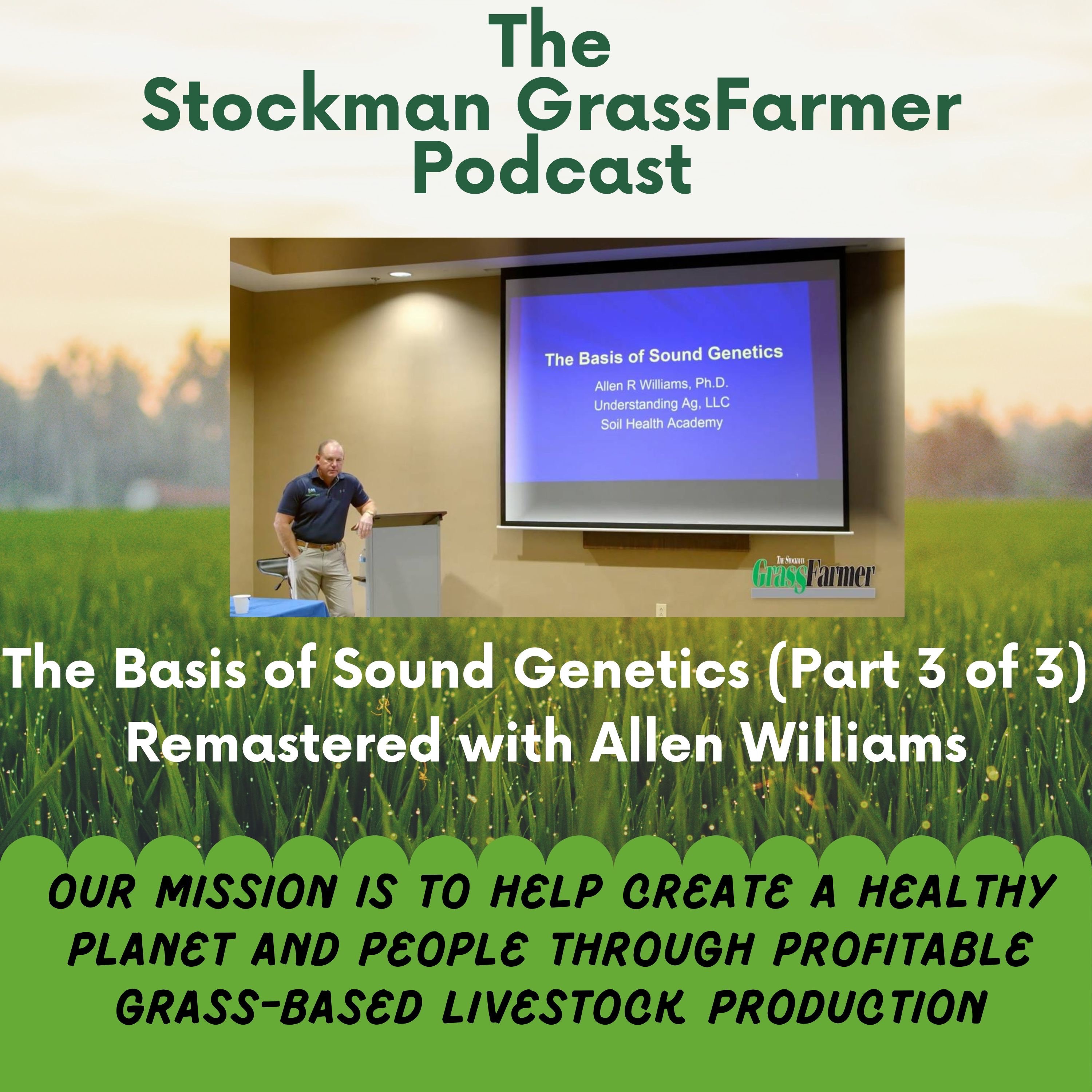
The Basis of Sound Genetics by Allen Williams Part 3 of 3 (remastered)
 The Stockman Grassfarmer Podcast
In this episode, Allen Williams brings the series to a powerful close by connecting grazing management, soil health, and genetic selection into one unified system. This final installment emphasizes that genetics are not fixed—they are expressed through environment, management, and decision-making. By aligning grazing practices with plant biology and focusing on economically relevant traits, producers can unlock better performance without increasing inputs. The episode explores how timing, forage maturity, and microbiome health directly influence epigenetics, while also challenging conventional approaches to genetic selection that rely too heavily on single-trait tools like EPDs. 🔑 Key Points Covered: Epigenetics Begins in the Pasture: Grazing timing and forage maturity directly impact gene expression and animal performance. Optimal Grazing Window: Target mid- to late-stage plant maturity rather than overly vegetative forage to support better outcomes. Afternoon Moves Matter: Moving livestock in the early-to-mid afternoon aligns with peak plant energy (BRIX), improving intake and gains. Dry Matter & Residual Management: Limit grazing to 30–50% of available forage and ensure adequate intake to protect plant recovery and soil health. Performance Without Added Inputs: Proper grazing management alone can increase average daily gain by 0.25–0.5 lbs per head per day.
Publisher
The Stockman Grassfarmer Podcast
Link
www.stockmangrassfarmer.digital/podcasts/the-stockman-grassfarmer-podcast/episodes/2149188907
Published
April 8, 2026
Duration
36 min
Format
Podcast
Category
Lifestyle · Courses
Source
RSS feed
Host
The Stockman Grassfarmer
#soundgenetics #allenwilliams #remastered #courses
