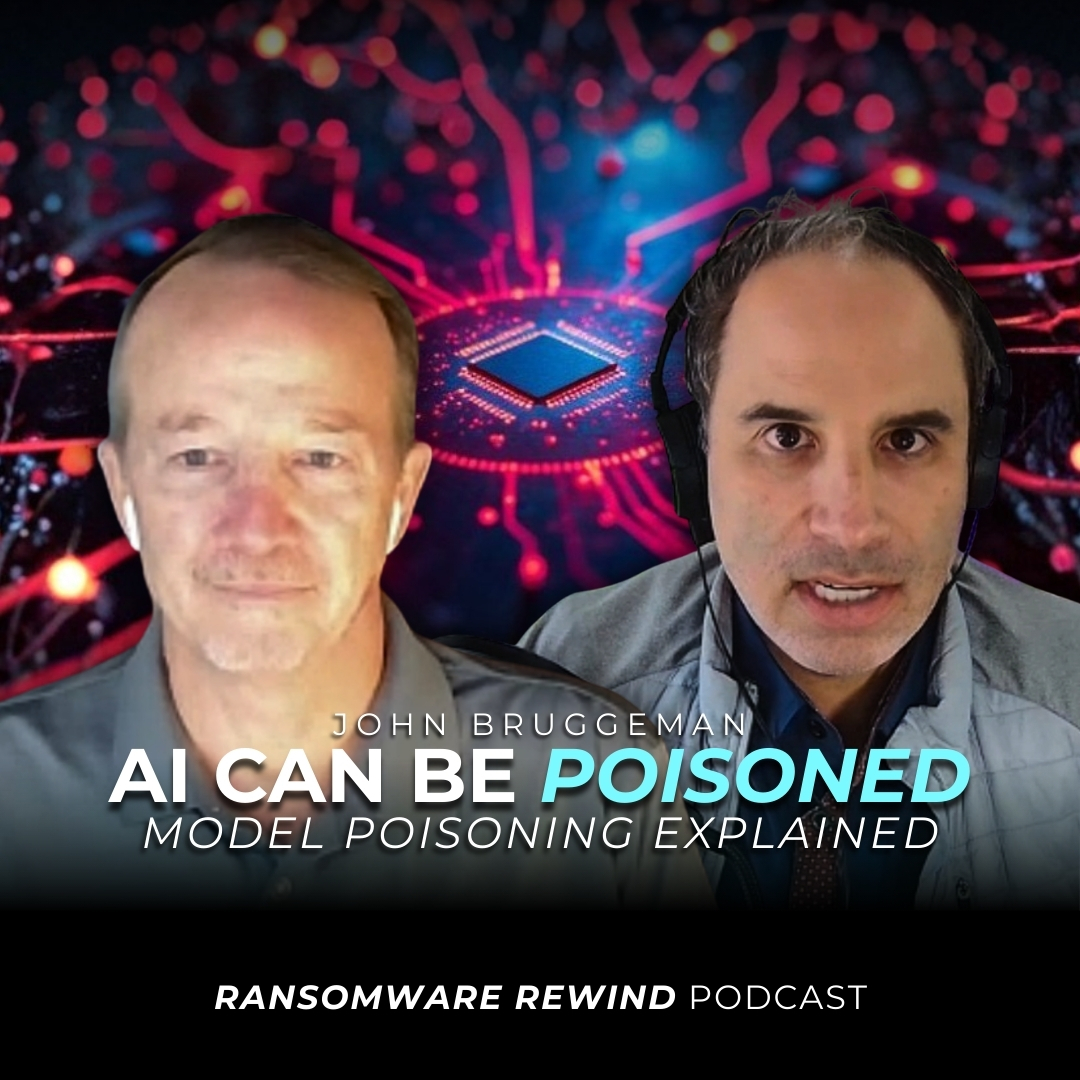
Just 250 Malicious Samples Can Poison AI Models - John Bruggerman's inside briefing on AI BrainRot - EP 20
 Ransomware Rewind
In this episode of the Ransomware Rewind podcast, host Joe Erle (@joe_erle) interviews John Bruggeman, Chief Information Security Officer (CISO) at CBTS and OnX, on emerging cybersecurity threats like AI model poisoning and prompt injection attacks. With over 25 years of experience in cybersecurity, John explains how unsanitized inputs and as few as 250 malicious data points can cause "brain rot" or model decay in large language models (LLMs), resulting in unreliable outputs, hidden backdoors, and long-term AI vulnerabilities. John explains real-world AI attack vectors, including tool poisoning through hidden HTML code in emails, agent session smuggling in enterprise tools like Microsoft Copilot, and remote code execution risks that enable data exfiltration or excessive resource consumption. The discussion also covers recent DNS outages at Microsoft and AWS, illustrating how critical infrastructure weaknesses exacerbate AI security risks. John shares practical cybersecurity best practices for protecting AI systems: always sanitize inputs, enforce human-in-the-loop oversight, keep clean backups for model recovery, and integrate ethical guardrails inspired by Isaac Asimov's laws of robotics. They explore ethical concerns in AI, such as Reddit-driven misinformation campaigns, AI's psychological impact on vulnerable users like teenagers, and why LLMs aren't truly sentient (they're just advanced next-word predictors).
Publisher
Ransomware Rewind
Link
10d31dcf-2599-4c6a-818b-c4547298bd9c.libsyn.com/just-250-malicious-samples-can-poison-ai-models-john-bruggermans-inside-briefing-on-ai-brainrot-ep-20
Published
January 22, 2026
Duration
40 min
Format
Podcast
Category
Issues · Tech News
Source
RSS feed
Host
Joe Erle
#malicioussamples #poisonaimodels #johnbruggermans
