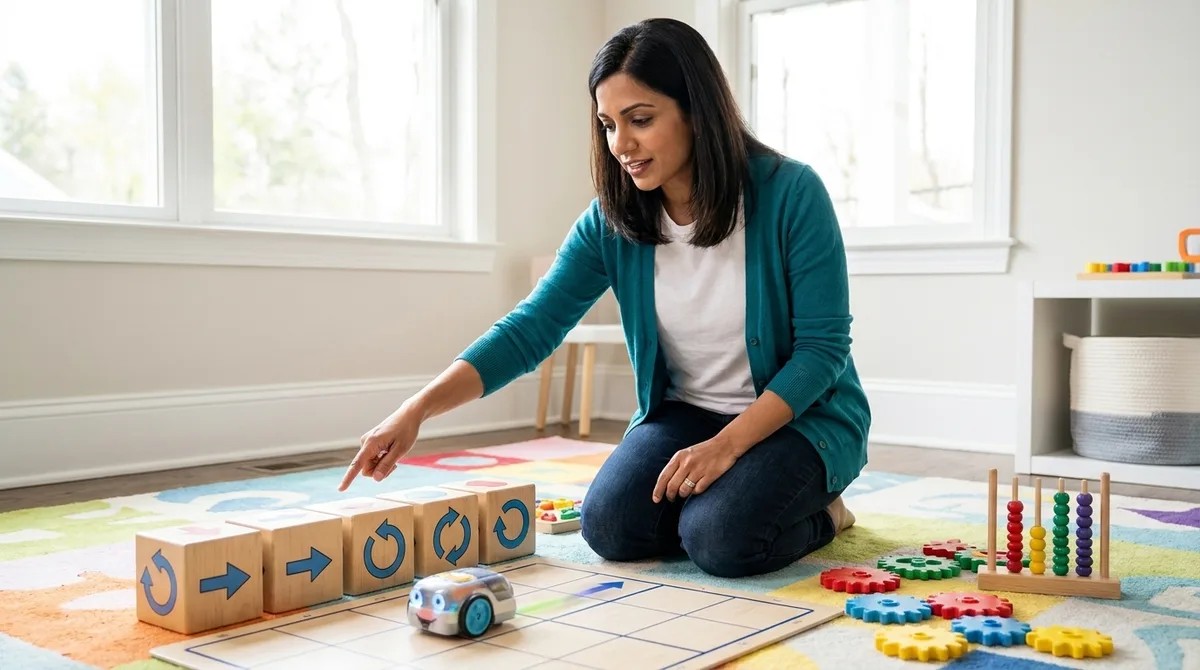
Understanding Sequence, Loops, and Conditionals Through Physical Play
 The STEM Lab
Understanding Sequence, Loops, and Conditionals Through Physical Play When you're trying to teach a seven-year-old what an "if-then" statement means, screen time isn't your only option—and often, it's not even your best one. Coding concepts physical toys create tangible, manipulable representations of algorithms that children can hold, rearrange, and test without ever opening a laptop. I've watched hundreds of students grasp nested loops within minutes using wooden blocks, after struggling for weeks with abstract on-screen syntax. These tools scaffold computational thinking beautifully because they externalize the invisible logic that makes programs work. This article walks you through the three foundational pillars of computational thinking—sequence, loops, and conditionals—and explains how physical manipulatives translate these abstractions into concrete learning experiences. You'll understand the pedagogical mechanisms at work, see how these concepts map to industry-standard programming, and learn to identify which physical tools build genuine transferable skills versus those that simply entertain. What Are Sequence, Loops, and Conditionals? These three structures form the g…
Publisher
The STEM Lab
Link
rss.com/podcasts/stem-lab/3025393
Published
July 27, 2026
Duration
23 min
Format
Podcast
Category
Lifestyle · Education for Kids
Source
RSS feed
Host
The Stem Lab
#understandingsequence #conditionals #physicalplay #educationforkids
