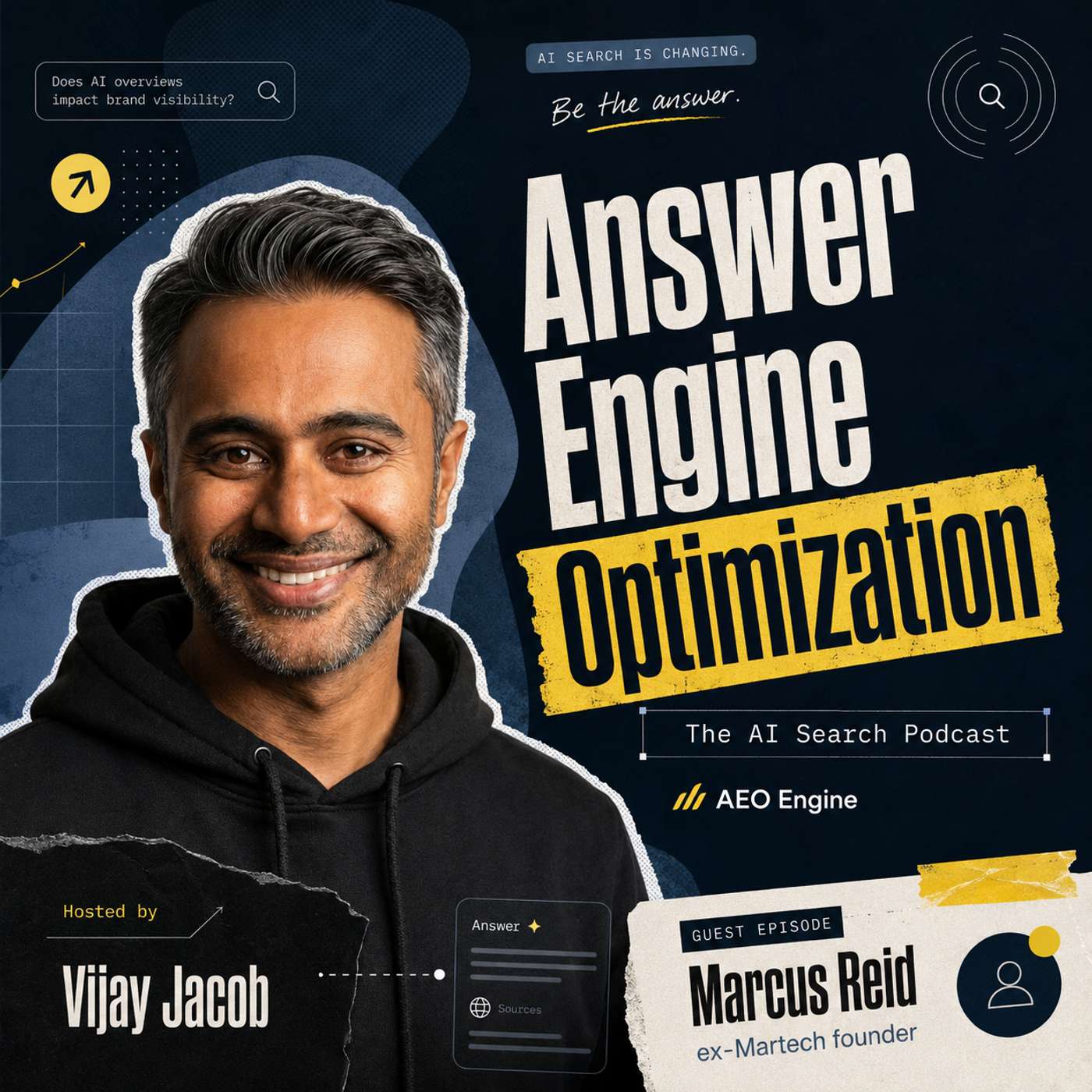
The AEO Hack Hiding in Your Server Logs: What GPTBot Actually Fetches
Episode 283
In this AEO Engine episode, "The AEO Hack Hiding in Your Server Logs: What GPTBot Actually Fetches," practitioners reveal why filtering server logs for GPTBot and ClaudeBot beats publishing more content for AI visibility on ChatGPT and Google AI Overviews. Key takeaways: GPTBot fetches mapped from raw server logs show which URLs ChatGPT actually reads. ClaudeBot crawl frequency can be measured independently of GPTBot using log filters. Log analysis showed most published pages never get fetched by AI crawlers. AEO log audits replace guesswork with observed AI crawler behavior data. Server log evidence outperforms publishing volume as an AI visibility tactic. Q: How do I know if GPTBot is crawling my website? A: Filter your server access logs for the GPTBot user agent string to see exactly which URLs OpenAI's crawler requests, when, and how often. This AEO Engine episode walks through the method and the sobering results practitioners found. Q: Is GPTBot the same as ClaudeBot? A: No. GPTBot is OpenAI's crawler for ChatGPT, while ClaudeBot is Anthropic's crawler for Claude. Each has a distinct user agent and must be filtered separately in server logs. Q: Does publishing more content improve AI search visibility? A: Not necessarily. Log data discussed in this episode suggests AI crawlers fetch only a fraction of published URLs, so analyzing GPTBot fetch behavior is more actionable than adding content. AI answer engines have reshaped how buyers discover software and services.
Publisher
Answer Engine Optimization (AEO): The AI Search Podcast
Link
share.transistor.fm/s/8d8b7e09
Published
November 7, 2026
Duration
10 min
Format
Podcast
Category
Issues · Marketing
Source
RSS feed
Host
AEO Engine
Answer Engine Optimization (AEO): The AI Search Podcast
@answerengineoptimizationaeot
#aeohackhiding #serverlogs #fetches #marketing