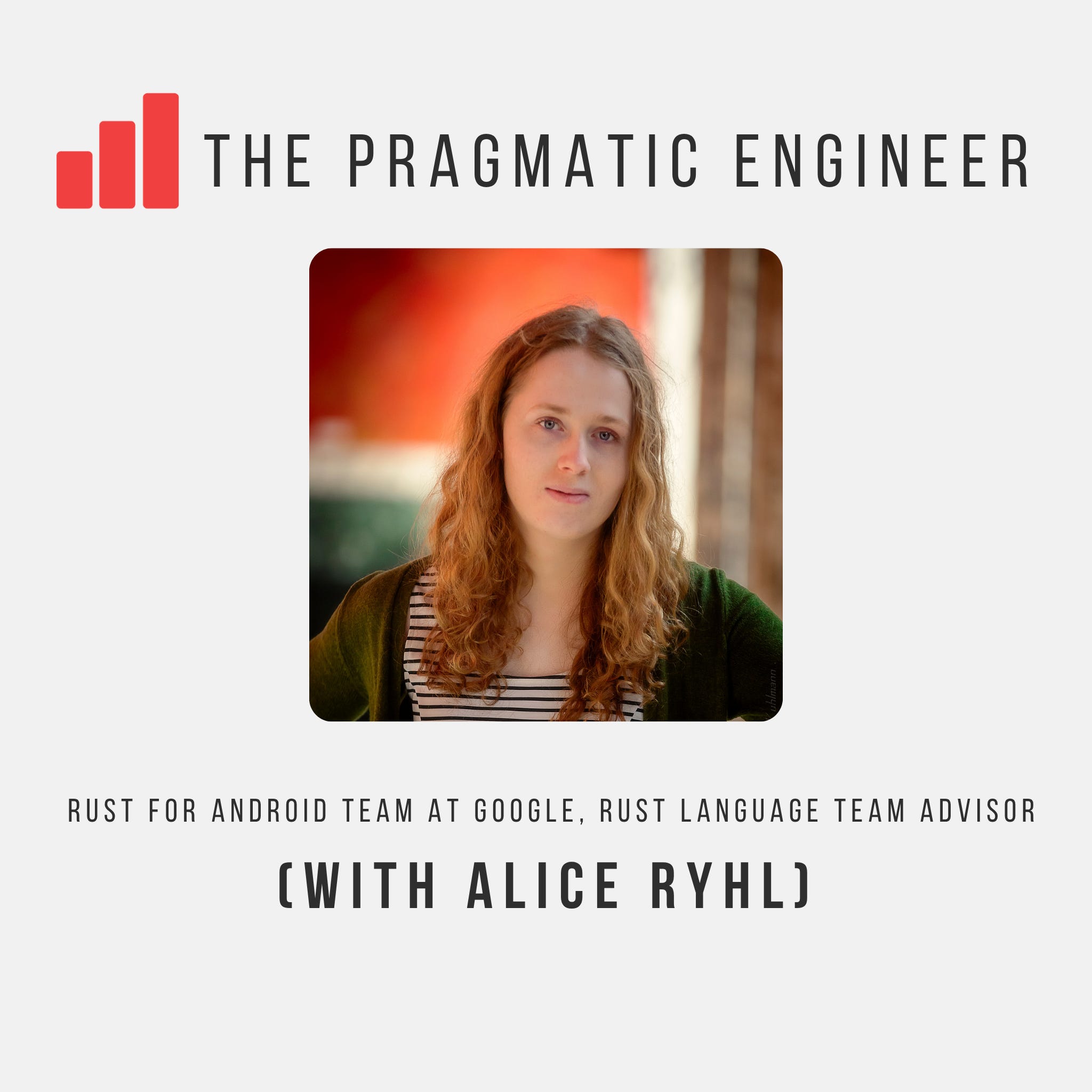
Why Rust is different, with Alice Ryhl
 The Pragmatic Engineer
Brought to You By: • Antithesis – verify your system’s correctness without human review or traditional integration tests – and avoid bugs or outages. • Sentry – application monitoring software considered “not bad” by millions of developers • Craft Conference: join Gergely, Kent Beck, Hillel Wayne and others at the conference dedicated to the art and science of software delivery craft. — Rust is one of the most admired programming languages around – and also one of the hardest to learn. What makes developers stick with it? In this episode of The Pragmatic Engineer Podcast, I sit down with Alice Ryhl, a software engineer on Google’s Android Rust team, and a core maintainer of Tokio, which is the most widely-used async runtime in Rust. We discuss what makes Rust different from other languages like TypeScript, Go, and C++, and why so many developers say that “once it compiles, it works.” We go deep into memory safety, ownership, borrowing, unsafe Rust, and Cargo. We also cover how Rust is governed by RFCs, feature flags, its six-week release cycle, how engineers get paid to work on the language, and also look into how Rust’s use inside the Linux kernel is progressing.
Publisher
The Pragmatic Engineer
Link
newsletter.pragmaticengineer.com/p/why-rust-is-different-with-alice
Published
May 20, 2026
Duration
1h 5m
Format
Podcast
Category
Issues · Tech News
Source
RSS feed
Host
Gergely Orosz
#rust #different #aliceryhl
