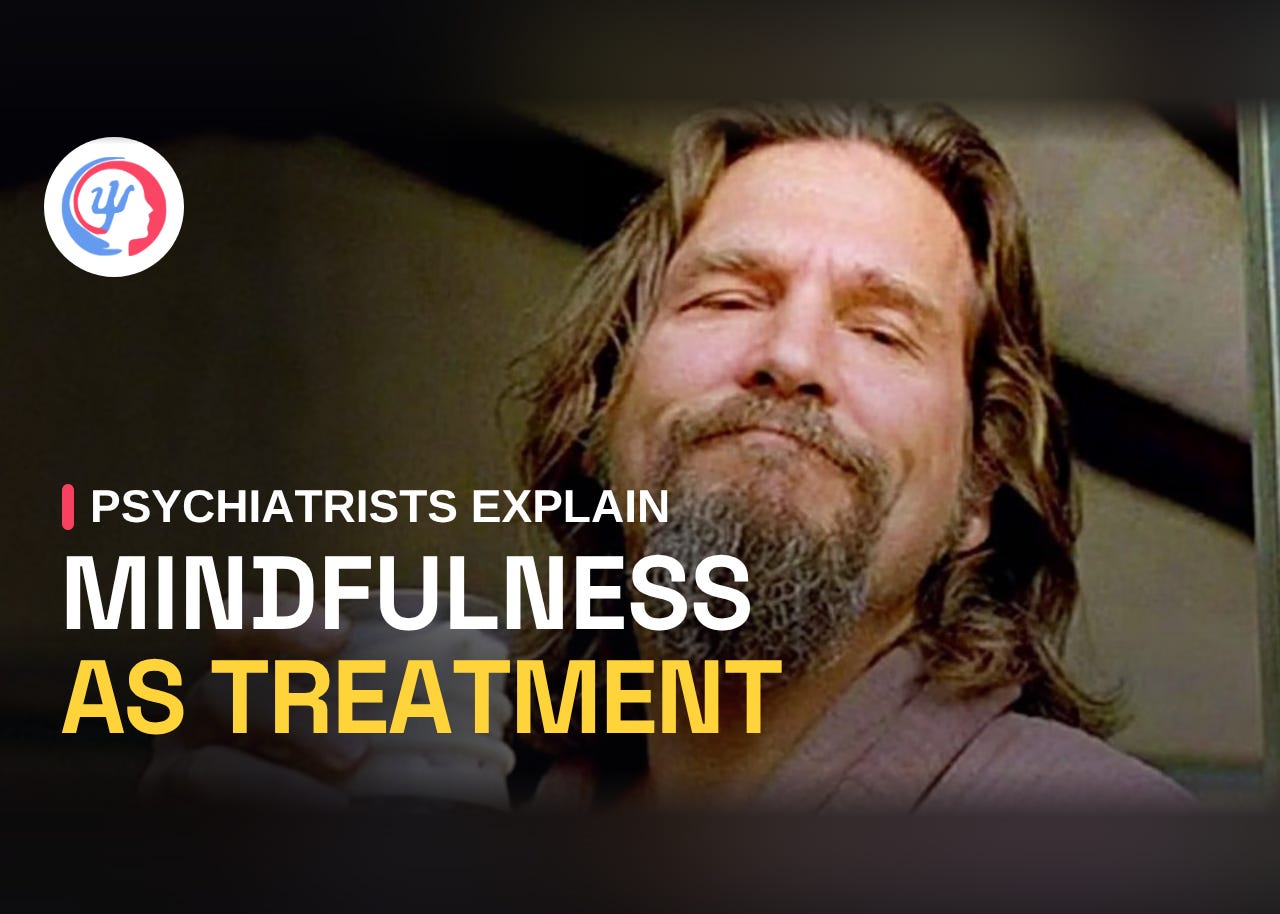
Mindfulness in Psychiatry: How to Teach It as a Clinical Treatment Skill
Mindfulness in psychiatry is the focus of this episode, with Doctors Malzberg and Fu treating it as a practical clinical skill rather than vague wellness advice. They define mindfulness as deliberate attention to the present moment without judgment, then connect it to DBT, MBCT, ACT, anxiety, depression, PTSD, substance use, and trauma-informed care. The conversation also covers when mindfulness should be modified, why it is not always a standalone treatment, and how clinicians can teach it through short, scheduled practice, DBT “what skills,” grounding techniques, and careful follow-up. What we cover * Why mindfulness can be treated as a medical intervention the patient does, like CBT for insomnia, though it grew from religious traditions, and its path through mindfulness-based stress reduction, DBT, ACT and MBCT. * A three-part definition: deliberate attention, to the present moment, without judgment (including not judging yourself for judging), and why drifting off is part of the practice. * What it targets: rumination and inward focus (with a brief mention of the default mode network), stepping back from thoughts as a process, and the paradox that practicing in order to get better undermines it. * Indications we grade: generalized anxiety disorder (A), major depression (A minus, mainly relapse prevention), substance use disorder (A), PTSD with an asterisk because grounding may fit better, and bipolar disorder and schizophrenia as general wellness only.
Publisher
Psychofarm Podcast
Link
psychofarm.substack.com/p/mindfulness-in-psychiatry-how-to
Published
May 5, 2026
Duration
52 min
Format
Podcast
Category
Lifestyle · Mental Health
Source
RSS feed
Host
Psychiatry, Skepticism, and Integration.
Psychofarm Podcast
@psychofarmpodcast
#mindfulness #psychiatry #clinicaltreatmentskill #mentalhealth #medicine
